Signed in as:
filler@godaddy.com

Explore all 21 California missions in order, from Mission San Diego de Alcalá to Mission San Francisco Solano. Discover their history, architecture, gardens, patron saints and relationships with California’s Indigenous communities.
The California missions were established between 1769 and 1823 during Spanish colonization. This educational guide examines their churches, bell towers, adobe buildings, agriculture, Catholic influence, Indigenous labor and lasting impact on California history.
Use our printable mission map, historical timeline, architecture worksheet, vocabulary guide, coloring pages and classroom projects to support student research and hands-on learning.

Mission San Diego de Alcalá | History, Facts & Visitor Guide
California’s First Mission: Founded in 1769
Kumeyaay History, Architecture, Map & Mission San Diego Facts
Mission San Diego de Alcalá was the first of the 21 missions established in Alta California. Founded on July 16, 1769, and relocated to its present Mission Valley site in 1774,
Mission San Diego de Alcalá | History, Facts & Visitor Guide
California’s First Mission: Founded in 1769
Kumeyaay History, Architecture, Map & Mission San Diego Facts
Mission San Diego de Alcalá was the first of the 21 missions established in Alta California. Founded on July 16, 1769, and relocated to its present Mission Valley site in 1774, the mission became known as the Mother of the Missions. This guide covers its history, Catholic heritage, architecture, Kumeyaay homeland and resistance, agriculture, important events, visitor information, map, frequently asked questions and educational resources.
Mission number: 1 of 21
Founded: July 16, 1769
Location: San Diego, California
Named for: Saint Didacus of Alcalá
Indigenous homeland: Kumeyaay

Mission San Carlos Borromeo de Carmelo | History & Facts
California’s Second Mission: Founded in 1770
Carmel Mission History, Architecture & Indigenous Communities
Mission San Carlos Borromeo de Carmelo, commonly known as Carmel Mission, was founded in 1770 and became the second of California’s 21 missions. Originally established in Monte
Mission San Carlos Borromeo de Carmelo | History & Facts
California’s Second Mission: Founded in 1770
Carmel Mission History, Architecture & Indigenous Communities
Mission San Carlos Borromeo de Carmelo, commonly known as Carmel Mission, was founded in 1770 and became the second of California’s 21 missions. Originally established in Monterey and moved to Carmel in 1771, the mission became an important center of the California mission system. Explore its Catholic history, distinctive stone architecture, Junípero Serra connection, Rumsen Ohlone and Esselen homelands, historic cemetery, gardens, important events and educational resources.
Mission number: 2 of 21
Founded: June 3, 1770
Location: Carmel-by-the-Sea, California
Named for: Saint Charles Borromeo
Indigenous homelands: Rumsen Ohlone and Esselen
Mission San Antonio de Padua | History, Facts & Visitor Guide
California’s Third Mission: Founded in 1771
San Antonio Mission History, Salinan Homeland & Architecture
Mission San Antonio de Padua was founded in 1771 as the third of California’s 21 missions. Located in the Valley of the Oaks in present-day Monterey County, the mission deve
Mission San Antonio de Padua | History, Facts & Visitor Guide
California’s Third Mission: Founded in 1771
San Antonio Mission History, Salinan Homeland & Architecture
Mission San Antonio de Padua was founded in 1771 as the third of California’s 21 missions. Located in the Valley of the Oaks in present-day Monterey County, the mission developed on the ancestral homeland of Salinan peoples. Explore its Franciscan and Catholic history, agriculture, architecture, mission-era industries, Indigenous experiences, important events, historic cemetery, map and educational resources.
Mission number: 3 of 21
Founded: July 14, 1771
Location: Jolon, California
Named for: Saint Anthony of Padua
Indigenous homeland: Salinan
Mission San Gabriel Arcángel | History, Facts & Visitor Guide
California’s Fourth Mission: Founded in 1771
San Gabriel Mission History, Tongva Homeland & Architecture
Mission San Gabriel Arcángel was founded in 1771 as the fourth of California’s 21 missions. Located in the Los Angeles region, the mission was established on the ancestral h
Mission San Gabriel Arcángel | History, Facts & Visitor Guide
California’s Fourth Mission: Founded in 1771
San Gabriel Mission History, Tongva Homeland & Architecture
Mission San Gabriel Arcángel was founded in 1771 as the fourth of California’s 21 missions. Located in the Los Angeles region, the mission was established on the ancestral homeland of Tongva communities and became an important agricultural and transportation center during the Spanish colonial period. Explore its Catholic history, Indigenous experiences, distinctive architecture, agriculture, important events, cemetery, map and educational resources.
Mission number: 4 of 21
Founded: September 8, 1771
Location: San Gabriel, California
Named for: Archangel Gabriel
Indigenous homeland: Tongva

Mission San Luis Obispo de Tolosa | History, Facts & Visitor Guide
California’s Fifth Mission: Founded in 1772
San Luis Obispo Mission History, Chumash Homeland & Architecture
Mission San Luis Obispo de Tolosa was founded in 1772 as the fifth of California’s 21 missions. Located along California’s Central Coast, the mission developed on C
Mission San Luis Obispo de Tolosa | History, Facts & Visitor Guide
California’s Fifth Mission: Founded in 1772
San Luis Obispo Mission History, Chumash Homeland & Architecture
Mission San Luis Obispo de Tolosa was founded in 1772 as the fifth of California’s 21 missions. Located along California’s Central Coast, the mission developed on Chumash ancestral lands and later became the center of the city of San Luis Obispo. Explore its Catholic history, Indigenous experiences, architecture, agriculture, important events, mission plaza, map and educational resources.
Mission number: 5 of 21
Founded: September 1, 1772
Location: San Luis Obispo, California
Named for: Saint Louis, Bishop of Toulouse
Indigenous homeland: Chumash
Mission San Francisco de Asís | Mission Dolores History & Facts
California’s Sixth Mission: Founded in 1776
Mission Dolores History, Ohlone Homeland & San Francisco Origins
Mission San Francisco de Asís, widely known as Mission Dolores, was founded in 1776 as the sixth of California’s 21 missions. Established in the San Francisco area on
Mission San Francisco de Asís | Mission Dolores History & Facts
California’s Sixth Mission: Founded in 1776
Mission Dolores History, Ohlone Homeland & San Francisco Origins
Mission San Francisco de Asís, widely known as Mission Dolores, was founded in 1776 as the sixth of California’s 21 missions. Established in the San Francisco area on the ancestral homelands of Ohlone peoples, it became one of the earliest colonial institutions in the region. Explore its Catholic history, Indigenous experiences, historic chapel, cemetery, architecture, important events, map and educational resources.
Mission number: 6 of 21
Founded: June 29, 1776
Location: San Francisco, California
Named for: Saint Francis of Assisi
Indigenous homeland: Ohlone

Mission San Juan Capistrano | History, Facts & Mission San Juan Capistrano | History, Facts & Visitor Guide
California’s Seventh Mission: Founded in 1776
San Juan Capistrano History, Acjachemen Homeland & Architecture
Mission San Juan Capistrano was founded in 1776 as the seventh of California’s 21 missions. Established on the ancestral h
Mission San Juan Capistrano | History, Facts & Mission San Juan Capistrano | History, Facts & Visitor Guide
California’s Seventh Mission: Founded in 1776
San Juan Capistrano History, Acjachemen Homeland & Architecture
Mission San Juan Capistrano was founded in 1776 as the seventh of California’s 21 missions. Established on the ancestral homeland of the Acjachemen people, the mission is known for its historic stone church ruins, gardens and long association with the annual return of cliff swallows. Explore its Catholic history, Indigenous experiences, architecture, important events, cemetery, map and educational resources. Guide
Mission number: 7 of 21
Founded: November 1, 1776
Location: San Juan Capistrano, California
Named for: Saint John of Capistrano
Indigenous homeland: Acjachemen
Mission Santa Clara de Asís | History, Facts & Visitor Guide
California’s Eighth Mission: Founded in 1777
Santa Clara Mission History, Ohlone Homeland & Architecture
Mission Santa Clara de Asís was founded in 1777 as the eighth of California’s 21 missions. Established in the Santa Clara Valley on Ohlone ancestral lands, the mission was re
Mission Santa Clara de Asís | History, Facts & Visitor Guide
California’s Eighth Mission: Founded in 1777
Santa Clara Mission History, Ohlone Homeland & Architecture
Mission Santa Clara de Asís was founded in 1777 as the eighth of California’s 21 missions. Established in the Santa Clara Valley on Ohlone ancestral lands, the mission was relocated several times because of flooding and other challenges. Today its reconstructed church stands on the campus of Santa Clara University. Explore its history, Indigenous experiences, architecture, agriculture, important events, map and educational resources.
Mission number: 8 of 21
Founded: January 12, 1777
Location: Santa Clara, California
Named for: Saint Clare of Assisi
Indigenous homeland: Tamien Ohlone

Mission San Buenaventura | History, Facts & Visitor Guide
California’s Ninth Mission: Founded in 1782
San Buenaventura Mission History, Chumash Homeland & Architecture
Mission San Buenaventura was founded in 1782 as the ninth of California’s 21 missions. Located near the Pacific coast on Chumash ancestral lands, the mission became known f
Mission San Buenaventura | History, Facts & Visitor Guide
California’s Ninth Mission: Founded in 1782
San Buenaventura Mission History, Chumash Homeland & Architecture
Mission San Buenaventura was founded in 1782 as the ninth of California’s 21 missions. Located near the Pacific coast on Chumash ancestral lands, the mission became known for agriculture, irrigation and its connection to the development of present-day Ventura. Explore its Catholic history, Indigenous experiences, architecture, gardens, important events, cemetery, map and educational resources.
Mission number: 9 of 21
Founded: March 31, 1782
Location: Ventura, California
Named for: Saint Bonaventure
Indigenous homeland: Chumash
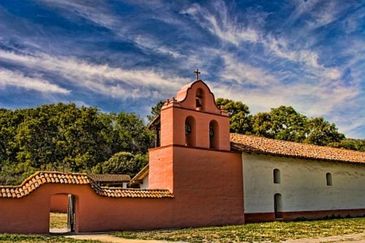
Mission Santa Barbara | History, Facts & Visitor Guide
California’s Tenth Mission: Founded in 1786
Santa Barbara Mission History, Chumash Homeland & Architecture
Mission Santa Barbara was founded in 1786 as the tenth of California’s 21 missions. Established on Chumash ancestral lands, it became one of the best-known California missions an
Mission Santa Barbara | History, Facts & Visitor Guide
California’s Tenth Mission: Founded in 1786
Santa Barbara Mission History, Chumash Homeland & Architecture
Mission Santa Barbara was founded in 1786 as the tenth of California’s 21 missions. Established on Chumash ancestral lands, it became one of the best-known California missions and remains an active Franciscan site. Explore its Catholic history, Indigenous experiences, twin-bell-tower architecture, gardens, cemetery, historic collections, important events, map and educational resources.
Mission number: 10 of 21
Founded: December 4, 1786
Location: Santa Barbara, California
Named for: Saint Barbara
Indigenous homeland: Chumash
Mission La Purísima Concepción | History & Facts
California’s Eleventh Mission: Founded in 1787
La Purísima Mission History, Chumash Homeland & Architecture
Mission La Purísima Concepción was founded in 1787 as the eleventh of California’s 21 missions. Established on Chumash ancestral lands near present-day Lompoc, the mission developed i
Mission La Purísima Concepción | History & Facts
California’s Eleventh Mission: Founded in 1787
La Purísima Mission History, Chumash Homeland & Architecture
Mission La Purísima Concepción was founded in 1787 as the eleventh of California’s 21 missions. Established on Chumash ancestral lands near present-day Lompoc, the mission developed into an agricultural and livestock center. Explore its Catholic history, Chumash experiences, architecture, ranching, important events, reconstructed buildings, map and educational resources.
Mission number: 11 of 21
Founded: December 8, 1787
Location: Lompoc, California
Named for: The Immaculate Conception
Indigenous homeland: Chumash
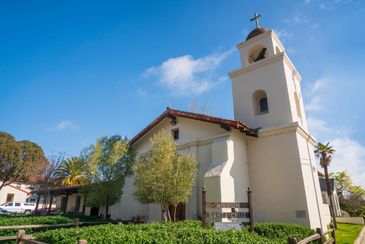
Mission number: 12 of 21
Founded: August 28, 1791
Location: Santa Cruz, California
Named for: The Holy Cross
Indigenous homeland: Awaswas-speaking Ohlone
Discover the mission established in the open landscape of the Salinas Valley.
Mission number: 13 of 21
Founded: October 9, 1791
Location: Soledad, California
Named for: Our Lady of Solitude
Indigenous homelands: Esselen and Salinan
Mission Soledad faced floods, isolation and difficult
Discover the mission established in the open landscape of the Salinas Valley.
Mission number: 13 of 21
Founded: October 9, 1791
Location: Soledad, California
Named for: Our Lady of Solitude
Indigenous homelands: Esselen and Salinan
Mission Soledad faced floods, isolation and difficult weather conditions. After secularization, many of its adobe structures deteriorated, although part of the chapel was later reconstructed. Indigenous people provided agricultural knowledge and labor while suffering disease, displacement and colonial control.
Explore our mission map, saints guide, adobe-architecture worksheet and classroom activities.
Button: Explore Mission Resources

Explore the California mission established near the eastern side of San Francisco Bay.
Mission number: 14 of 21
Founded: June 11, 1797
Location: Fremont, California
Named for: Saint Joseph
Indigenous homelands: Ohlone, Bay Miwok and Northern Valley Yokuts
Mission San José became an im
Explore the California mission established near the eastern side of San Francisco Bay.
Mission number: 14 of 21
Founded: June 11, 1797
Location: Fremont, California
Named for: Saint Joseph
Indigenous homelands: Ohlone, Bay Miwok and Northern Valley Yokuts
Mission San José became an important agricultural and livestock center. Its present church is a reconstruction based on the historic mission design. Indigenous people from several regions were brought to the mission, where they experienced forced labor, disease, religious pressure and separation from their communities.
Use our plants-and-gardens activity, architecture worksheet, mission timeline and printable map.
Button: Explore Mission Resources

Discover the mission beside one of California’s best-preserved historic plazas
.
Mission number: 15 of 21
Founded: June 24, 1797
Location: San Juan Bautista, California
Named for: Saint John the Baptist
Indigenous homeland: Mutsun Ohlone
Mission San Juan Bautista has a large three-aisl
Discover the mission beside one of California’s best-preserved historic plazas
.
Mission number: 15 of 21
Founded: June 24, 1797
Location: San Juan Bautista, California
Named for: Saint John the Baptist
Indigenous homeland: Mutsun Ohlone
Mission San Juan Bautista has a large three-aisled church and stands close to the San Andreas Fault. Its plaza helps visitors understand the layout of a Spanish colonial settlement. Mutsun Ohlone people endured forced labor, religious control, disease and loss of land, while their descendants continue protecting their culture and language.
Explore our architecture worksheet, Catholic saints guide, printable map and mission project.
Button: Explore Mission Resources

Explore a California mission celebrated for its preserved interior murals.
Mission number: 16 of 21
Founded: July 25, 1797
Location: San Miguel, California
Named for: Archangel Michael
Indigenous homeland: Salinan
Mission San Miguel’s church contains early n
Explore a California mission celebrated for its preserved interior murals.
Mission number: 16 of 21
Founded: July 25, 1797
Location: San Miguel, California
Named for: Archangel Michael
Indigenous homeland: Salinan
Mission San Miguel’s church contains early nineteenth-century murals created with the participation of Salinan artists. The original painted interior has never been fully repainted, making it especially significant. The broader mission story includes Indigenous artistry and labor alongside disease, coercion and cultural disruption.
Use our art and architecture worksheet, saints guide, timeline and printable mission map.
Button: Explore Mission Resources

Explore a California mission known for its impressive Convento and place along El Camino Real.
Mission number: 17 of 21
Founded: September 8, 1797
Location: Mission Hills, Los Angeles, California
Named for: Saint Ferdinand III, King of Spain
Indigenous homeland: Fernandeño Tataviam and Tongva
Explore a California mission known for its impressive Convento and place along El Camino Real.
Mission number: 17 of 21
Founded: September 8, 1797
Location: Mission Hills, Los Angeles, California
Named for: Saint Ferdinand III, King of Spain
Indigenous homeland: Fernandeño Tataviam and Tongva
Mission San Fernando’s Convento is the largest surviving two-story adobe structure in California and features a long colonnade of 19 arches. The mission was established at Achooykomenga, an Indigenous community connected to Fernandeño Tataviam, Tongva and neighboring peoples. Its history includes Indigenous labor, displacement, disease, coercion and cultural survival.
Use our art and architecture worksheet, saints guide, timeline and printable mission map.
Button: Explore Mission Resources

Explore the “King of the Missions,” celebrated for its size, distinctive church and historic lavandería.
Mission number: 18 of 21
Founded: June 13, 1798
Location: Oceanside, California
Named for: Saint Louis IX, King of France
Indigenous homeland: Payómkawichum, also known as Luiseño
Explore the “King of the Missions,” celebrated for its size, distinctive church and historic lavandería.
Mission number: 18 of 21
Founded: June 13, 1798
Location: Oceanside, California
Named for: Saint Louis IX, King of France
Indigenous homeland: Payómkawichum, also known as Luiseño
Mission San Luis Rey became one of the largest missions in Alta California. Its cruciform church, completed in 1815, features a distinctive wooden dome and cupola. Payómkawichum people supplied much of the knowledge and labor that sustained the mission’s buildings, agriculture and livestock operations. The complete history also includes coercion, disease, cultural disruption and Indigenous survival.
Use our art and architecture worksheet, saints guide, timeline and printable mission map.
Button: Explore Mission Resources
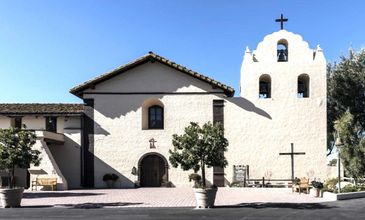
Explore a California mission known for its Chumash history, restored church and preserved religious artwork.
Mission number: 19 of 21
Founded: September 17, 1804
Location: Solvang, California
Named for: Saint Agnes of Rome
Indigenous homeland: Chumash
Mission Santa Inés was establishe
Explore a California mission known for its Chumash history, restored church and preserved religious artwork.
Mission number: 19 of 21
Founded: September 17, 1804
Location: Solvang, California
Named for: Saint Agnes of Rome
Indigenous homeland: Chumash
Mission Santa Inés was established between Missions Santa Barbara and La Purísima Concepción. An 1812 earthquake severely damaged its original buildings, and the present church was completed afterward. The mission became a central location during the Chumash Revolt of 1824, when Chumash people resisted mistreatment, military violence and mission control. Today, it remains an active Catholic parish and historic site.
Use our art and architecture worksheet, saints guide, timeline and printable mission map.
Button: Explore Mission Resources
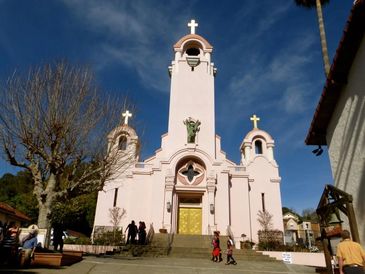
Explore a California mission first established as a medical asistencia for sick Indigenous residents.
Mission number: 20 of 21
Founded: December 14, 1817
Location: San Rafael, California
Named for: Archangel Raphael, associated with healing
Indigenous homeland: Coast Miwok and neighboring Pomo communities
Explore a California mission first established as a medical asistencia for sick Indigenous residents.
Mission number: 20 of 21
Founded: December 14, 1817
Location: San Rafael, California
Named for: Archangel Raphael, associated with healing
Indigenous homeland: Coast Miwok and neighboring Pomo communities
Mission San Rafael began as a medical asistencia connected to Mission San Francisco de Asís and became a full mission in 1822. Indigenous people suffering from disease were transferred there, although the mission system also contributed to displacement, coercion and devastating population loss. The original buildings eventually disappeared, and the present chapel was reconstructed on the historic site in 1949.
Use our art and architecture worksheet, saints guide, timeline and printable mission map.
Button: Explore Mission Resources
Explore California’s final, northernmost mission and the only one established under Mexican rule.
Mission number: 21 of 21
Founded: July 4, 1823
Location: Sonoma, California
Named for: Saint Francis Solanus
Indigenous homeland: Coast Miwok, Pomo, Wappo and Wintun peoples
Mission San F
Explore California’s final, northernmost mission and the only one established under Mexican rule.
Mission number: 21 of 21
Founded: July 4, 1823
Location: Sonoma, California
Named for: Saint Francis Solanus
Indigenous homeland: Coast Miwok, Pomo, Wappo and Wintun peoples
Mission San Francisco Solano was the last of California’s 21 missions and the only one founded after Mexico gained independence from Spain. Indigenous people from several Northern California communities experienced forced relocation, coercive religious practices, labor demands, disease and cultural disruption at the mission. Today, its surviving buildings form part of Sonoma State Historic Park.
Use our art and architecture worksheet, saints guide, timeline and printable mission map.
Button: Explore Mission Resources

First Mission: Mission San Diego de Alcalá (1769)
First Mission: Mission San Diego de Alcalá (1769)

Mission San Diego de Alcalá was the first of the 21 Spanish missions established in Alta California. Today, it remains an active Catholic parish, historic landmark and educational destination. Its complete history includes its Catholic heritage and the experiences, resistance, survival and continuing presence of the Kumeyaay people.
Mission San Diego de Alcalá was the first of the 21 Spanish missions established in Alta California. Today, it remains an active Catholic parish, historic landmark and educational destination. Its complete history includes its Catholic heritage and the experiences, resistance, survival and continuing presence of the Kumeyaay people.
Mission San Diego de Alcalá was founded on July 16, 1769. The original mission stood near the San Diego Presidio. In 1774, it was moved approximately six miles east to its present location, closer to Kumeyaay villages, reliable water and land suitable for agriculture.
Because it was the first Alta California mission, Mission San Diego became known as the Mother of the Missions.
The mission was founded by Saint Junípero Serra, a Spanish Franciscan priest. Serra later supervised the establishment of additional missions along the California coast.
The founding expedition also included other Franciscan priests, Spanish soldiers, laborers and colonial officials.
Mission San Diego was named for Saint Didacus of Alcalá, known in Spanish as San Diego de Alcalá.
Saint Didacus was a 15th-century Spanish Franciscan brother remembered for his humility, prayer, healing and service to people experiencing poverty or illness.
Spanish explorer Sebastián Vizcaíno named the San Diego region in honor of Saint Didacus in 1602.
Mission San Diego de Alcalá stands on the ancestral homeland of the Kumeyaay people, including Ipai and Tipai communities.
Spanish colonists frequently called the Kumeyaay “Diegueño,” but Kumeyaay is the preferred contemporary name.
Kumeyaay communities lived throughout present-day San Diego County and northern Baja California for thousands of years before the mission was established. They developed extensive knowledge of local plants, wildlife, water, agriculture and seasonal land management.
The mission system brought forced religious and cultural change, labor, relocation, disease and loss of freedom for many Native people. Kumeyaay resistance included the major uprising of November 1775.
Kumeyaay nations, families and communities remain an important living part of the San Diego region today.
Mission Basilica San Diego de Alcalá
10818 San Diego Mission Road
San Diego, California 92108
Visitor Center: (619) 281-8449
Parish Office: (619) 283-7319
The mission is located in San Diego’s Mission Valley near Interstates 8 and 15. Visitors using public transportation can take the San Diego Trolley to the Mission San Diego station.
Mission San Diego is recognized for its white stucco walls, adobe construction, red clay roof tiles, arched openings, courtyard gardens and large campanario, or bell wall.
The campanario rises approximately 46 feet and holds five bells. The largest bell, Mater Dolorosa, weighs approximately 1,200 pounds.
The church completed in 1813 incorporated large exterior buttresses to strengthen the façade following earlier earthquake damage.
The present mission complex was reconstructed in stages between 1915 and 1931 to represent its early 19th-century appearance. The current church is the fifth church building associated with the mission.
Mission agriculture included wheat, barley, corn, beans, grapes, orchards and vegetable gardens.
Livestock included cattle, sheep, horses and mules. Mission records state that its herds in 1797 included approximately:
• 10,000 cattle
• 20,000 sheep
• 1,250 horses
Native labor made the mission economy possible. Work included farming, irrigation, livestock care, adobe construction, weaving, blacksmithing, leatherworking, carpentry and food production.
A dam and aqueduct system constructed upstream on the San Diego River carried water to the mission’s fields and buildings.
1769: Mission San Diego de Alcalá was founded near Presidio Hill.
1774: The mission was relocated to its present Mission Valley location.
1775: Kumeyaay resistance culminated in an uprising that burned the mission. Father Luís Jayme and two other people were killed.
1776–1780: The mission was rebuilt.
1803 and 1812: Earthquakes damaged mission structures.
1813: A new church with supporting buttresses was completed and dedicated.
1834: The Mexican government secularized the mission.
1846–1862: The property passed through private and United States military use.
1862: President Abraham Lincoln restored 22 acres of mission property to the Catholic Church.
1915–1931: Major reconstruction restored the mission church’s early appearance.
1941: Mission San Diego again became an active parish church.
1976: Pope Paul VI designated the church a minor basilica.
The mission grounds contain California’s first historic mission cemetery. Simple crosses and memorial markers represent people buried there during the mission period and later years.
Father Luís Jayme, who was killed during the Kumeyaay uprising of 1775 and is recognized by the Catholic Church as California’s first Catholic martyr, is entombed inside the church near the sanctuary.
The cemetery remains a sacred burial place. Visitors should behave respectfully and follow all posted rules.
Mission San Diego de Alcalá remains an active Catholic parish, minor basilica, historic landmark, museum destination and cultural center.
Visitor Center and Gift Shop Hours:
Open daily from 9:00 a.m. to 4:00 p.m.
Closed on Thanksgiving Day, Christmas Day and New Year’s Day.
Current Visitor Admission:
• Adults: $8
• Visitors 55+, active military and students: $5
• Children ages 6–12: $3
• No visitor admission fee for people attending Mass
Self-guided and scheduled docent-led tours are available. Hours, admission prices, tours and Mass schedules can change. Visitors should verify current information at MissionSanDiego.org before traveling.
1. Why is Mission San Diego de Alcalá important?
Mission San Diego was the first of the 21 missions established in Alta California. This earned it the nickname Mother of the Missions.
2. Who lived in the area before the mission was established?
The mission stands on the ancestral homeland of the Kumeyaay people, whose communities continue throughout San Diego County and northern Baja California.
3.Is the present church the original building from 1769?
No. The original mission stood near Presidio Hill. Several churches were built, destroyed or reconstructed. The current building represents the church completed in 1813 and was reconstructed primarily between 1915 and 1931.
4. What is the mission’s most recognizable architectural feature?
Its best-known feature is the approximately 46-foot campanario, or bell wall, containing five bells.
5. Can visitors tour the mission or attend Mass?
Yes. The mission is an active Catholic parish that offers visitor access, self-guided tours and scheduled docent-led tours. Visitors should check the official website for current schedules.
Map location:
Mission Basilica San Diego de Alcalá
10818 San Diego Mission Road
San Diego, California 92108
Suggested map link:
https://www.google.com/maps/search/?api=1&query=Mission+Basilica+San+Diego+de+Alcala
Suggested photograph captions:
• Mission San Diego de Alcalá church and five-bell campanario
• Historic cemetery and memorial crosses at Mission San Diego
• Mission courtyard, adobe walls and gardens
• Red clay roof tiles and Spanish Colonial architecture
• Agricultural plants representing mission-era crops
Add the Mission San Diego infographic above as the main introduction image.
Recommended image description:
Educational illustration of Mission San Diego de Alcalá featuring the mission church, five-bell campanario, historic cemetery, grapes, wheat, corn, cattle, horses, marigolds and decorative spiderweb corners.
Student Name: __________________________
Date: __________________________
Mission San Diego was the:
1st mission / 7th mission / 21st mission
TEACHER ANSWER KEY
Mission San Carlos Borromeo de Río Carmelo, commonly called Carmel Mission, was the second of the 21 Spanish missions established in Alta California. It became the headquarters of the California mission system and the home of Saint Junípero Serra. Its complete history includes its Catholic heritage and the experiences, forced labor, cultu
Mission San Carlos Borromeo de Río Carmelo, commonly called Carmel Mission, was the second of the 21 Spanish missions established in Alta California. It became the headquarters of the California mission system and the home of Saint Junípero Serra. Its complete history includes its Catholic heritage and the experiences, forced labor, cultural disruption, survival and continuing presence of Rumsen Ohlone and Esselen peoples.
FOUNDING DATE
Mission San Carlos Borromeo was founded on June 3, 1770, beside Monterey Bay near the Spanish Presidio of Monterey.
In 1771, the mission was moved to its present location near the Carmel River. The new site offered fresh water, fertile land and closer access to Native villages. Moving the mission also created distance from the soldiers stationed at the presidio.
Carmel Mission became the second mission established in Alta California.
FOUNDER
The mission was founded by Saint Junípero Serra, a Spanish Franciscan priest, with the support of the expedition led by Gaspar de Portolá.
Serra made Carmel Mission his headquarters while supervising the developing California mission system. He lived there for many years and died at the mission on August 28, 1784.
PATRON SAINT
The mission was named for Saint Charles Borromeo, known in Spanish as San Carlos Borromeo.
Saint Charles Borromeo was a 16th-century Catholic cardinal and Archbishop of Milan. He is remembered for church reform, religious education and service to people experiencing poverty, illness and hardship.
The words “Río Carmelo” refer to the Carmel River near the mission’s permanent location
.
INDIGENOUS COMMUNITY
Carmel Mission stands within the homelands of Indigenous peoples commonly identified today as Rumsen Ohlone and Esselen.
Rumsen communities lived around the Carmel River, Monterey Peninsula and surrounding coastal region long before Spanish colonization. Esselen communities lived throughout the Santa Lucia Mountains and Big Sur coast.
These communities possessed extensive knowledge of local plants, wildlife, coastal resources, waterways, controlled burning and seasonal land management.
The mission system brought forced religious and cultural change, labor, relocation, disease and loss of freedom. Native families were separated, traditional languages and ceremonies were suppressed and many people died following exposure to introduced diseases and harsh mission conditions.
Rumsen Ohlone and Esselen people survived these experiences. Their descendants continue preserving languages, ceremonies, family histories, cultural knowledge and relationships with their ancestral homelands.
LOCATION AND ADDRESS
Carmel Mission Basilica
3080 Rio Road
Carmel-by-the-Sea, California 93923
Telephone: (831) 624-1271
The mission is located near the Carmel River, approximately five miles south of Monterey. It remains an active Catholic parish and a historic visitor destination.
ARCHITECTURE
Carmel Mission is recognized for its sandstone church, curved façade, arched entrance, courtyard gardens, red clay roof tiles and two unequal bell towers.
Construction of the present stone church began in 1793 under Father Fermín Francisco de Lasuén. Local sandstone from the Santa Lucia Mountains was used in the building.
The larger bell tower displays Spanish and Moorish architectural influences. Its rounded dome, arched openings and wrought-iron cross make it one of the mission’s most recognizable features.
The church contains a distinctive curved ceiling and thick masonry walls. The mission complex also includes a quadrangle, museum rooms, courtyards, fountains and gardens.
After decades of abandonment and deterioration, restoration work began during the 19th century. A more extensive restoration directed by Harry Downie started in 1936 and continued for many years.
AGRICULTURE AND INDUSTRIES
Mission agriculture included wheat, barley, corn, beans, grapes, orchard fruit and vegetables.
Mission residents developed vineyards, orchards, gardens and grazing lands. Livestock included cattle, sheep and horses.
Native labor made the mission economy possible. Work included farming, irrigation, livestock care, weaving, leatherworking, carpentry, blacksmithing, cooking and the construction of adobe and stone buildings.
Food and manufactured goods supported the mission community and helped supply other Spanish colonial settlements.
IMPORTANT HISTORICAL EVENTS
1770: Mission San Carlos Borromeo was founded near the Monterey Presidio.
1771: The mission was moved to the Carmel River area for fresh water, farmland and proximity to Native villages.
1771–1784: Carmel Mission served as Junípero Serra’s home and headquarters.
1784: Junípero Serra died at the mission and was buried beneath the church sanctuary.
1793: Construction began on the present sandstone church under Father Fermín Francisco de Lasuén.
1797: The stone church was completed near the end of the 18th century.
1821: Mexico gained independence from Spain, bringing California under Mexican government authority.
1834: Carmel Mission was secularized by the Mexican government.
1859: Mission property was returned to the Catholic Church.
1884: A new roof was placed over the deteriorating church.
1936: Harry Downie began a major restoration of the mission buildings.
1960: Carmel Mission was designated a National Historic Landmark.
1961: Pope John XXIII designated the church a minor basilica.
CEMETERY INFORMATION
Carmel Mission contains a historic cemetery and burial areas associated with the mission period and later parish history.
Saint Junípero Serra is entombed beneath the floor of the church near the sanctuary. Memorials within the mission also recognize other Franciscan priests and people connected with the mission.
The cemetery and church burials are sacred places. Visitors should remain on designated paths, avoid touching memorials and follow all posted rules.
When discussing mission burials, it is also important to recognize that many Indigenous deaths during the mission period resulted from disease, forced relocation and colonial living conditions.
PRESENT-DAY VISITOR INFORMATION
Carmel Mission remains an active Catholic parish, minor basilica, National Historic Landmark, museum and educational destination.
Visitor hours currently listed by Carmel Mission:
Monday and Tuesday: Closed
Wednesday and Thursday: 10:00 a.m. to 4:00 p.m.
Friday and Saturday: 10:00 a.m. to 5:00 p.m.
Sunday: 11:30 a.m. to 5:00 p.m.
The grounds generally close approximately 15 minutes before the museum store.
Current visitor admission:
• Adults: $15
• Seniors age 62 and older: $12
• Youth ages 6–17: $8
• Children younger than 6: Free
Self-guided visits are available. Group and school tours may require advance arrangements. Most visitor routes are accessible, and wheelchairs may be requested.
Because Carmel Mission is an active parish, access may be limited during Masses, weddings, funerals and other religious events.
Hours, admission prices and schedules can change. Visitors should verify current information at CarmelMission.org before traveling.
FIVE FREQUENTLY ASKED QUESTIONS
Why is Carmel Mission important?
Carmel Mission was the second California mission and served as Junípero Serra’s headquarters. Its restored sandstone church is one of California’s best-known mission buildings.
Who lived in the region before the mission was established?
Rumsen Ohlone and Esselen peoples lived throughout the Carmel, Monterey and Big Sur regions for thousands of years before Spanish colonization. Their descendants and tribal communities continue today.
Why was the mission moved from Monterey to Carmel?
The Carmel River location provided fresh water, fertile agricultural land and proximity to Native villages. It also separated the mission from tensions involving soldiers at the Monterey Presidio.
Is Junípero Serra buried at Carmel Mission?
Yes. Serra died at Carmel Mission in 1784 and is entombed beneath the church floor near the sanctuary.
Can visitors tour Carmel Mission or attend Mass?
Yes. Carmel Mission is an active Catholic parish and visitor destination. Museum access and worship schedules should be confirmed on the official website before visiting.
MAP AND PHOTOGRAPH
Map location:
Carmel Mission Basilica
3080 Rio Road
Carmel-by-the-Sea, California 93923
Suggested map link:
https://www.google.com/maps/search/?api=1&query=Carmel+Mission+Basilica
Suggested photograph captions:
• Sandstone façade and bell towers of Carmel Mission
• Courtyard gardens and fountain at Mission San Carlos Borromeo
• Historic church interior and burial place of Junípero Serra
• Red clay roof tiles, arches and stone construction
• Mission gardens representing historic crops and orchards
Add the Carmel Mission infographic above as the main introduction image.
Recommended image description:
Educational illustration of Mission San Carlos Borromeo de Río Carmelo featuring its sandstone church, unequal bell towers, arched entrance, courtyard, Carmel River, oak tree, grapes, wheat, orchard fruit, cattle and red clay roof tiles, with respectful acknowledgment of the Rumsen Ohlone and Esselen homelands.
PRINTABLE CARMEL MISSION WORKSHEET
Student Name: __________________________
Date: __________________________
1.On what date was Mission San Carlos Borromeo founded?
2.Who founded the mission?
3.For which patron saint was the mission named?
4.Which Indigenous communities are connected with the mission’s location?
5.Why was the mission moved from Monterey to the Carmel River area?
6.Name three architectural features of Carmel Mission.
7.List four crops grown at the mission.
8.Why did Carmel Mission become important to the California mission system?
9.What happened to the mission following secularization?
10.Why is it important to include Rumsen Ohlone and Esselen perspectives when studying Carmel Mission?
11.Circle the correct answer:
Carmel Mission was the:
1st mission / 2nd mission / 21st mission
12.Draw and label the sandstone church, arched entrance, unequal bell towers, clay-tile roof and courtyard.
13.Write one question you would ask during a visit to Carmel Mission.
TEACHER ANSWER KEY
1. June 3, 1770.
2. Junípero Serra.
3. Saint Charles Borromeo.
4. Rumsen Ohlone and Esselen peoples.
5. It was moved to obtain fresh water and agricultural land, to be closer to Native villages and to create distance from the Monterey Presidio.
6. Answers may include the sandstone walls, curved façade, arched entrance, unequal bell towers, domed tower, clay-tile roof, courtyard, fountain or gardens.
7.Wheat, barley, corn, beans, grapes, orchard fruit or vegetables.
8. It became Junípero Serra’s home and headquarters for the developing California mission system.
9. The Mexican government secularized the mission. Its buildings deteriorated before the property was returned to the Catholic Church and later restored.
10. Answers should recognize that the mission was established within Indigenous homelands and that Native people experienced forced labor, religious and cultural change, disease, resistance, survival and continuing cultural presence.
11.Second mission.
12.Student drawing.
13.Answers will vary.
Mission San Antonio de Padua was the third of the 21 Spanish missions established in Alta California. Founded in the remote Valley of the Oaks, the mission became an important agricultural and religious community. Its complete history includes its Catholic heritage and the experiences, labor, cultural disruptio
Mission San Antonio de Padua was the third of the 21 Spanish missions established in Alta California. Founded in the remote Valley of the Oaks, the mission became an important agricultural and religious community. Its complete history includes its Catholic heritage and the experiences, labor, cultural disruption, survival and continuing presence of the Salinan people.
Mission San Antonio de Padua was founded on July 14, 1771.
The mission was originally established near the San Antonio River in a broad valley surrounded by oak-covered hills.
Because of its relatively isolated location, the mission today retains a rural setting that helps visitors understand the landscape surrounding many early California missions.
Mission San Antonio de Padua was founded by Saint Junípero Serra, a Spanish Franciscan priest.
Serra personally participated in the mission's founding and celebrated Mass at the site.
Mission San Antonio was the third Alta California mission established under Serra's leadership.
The mission was named for Saint Anthony of Padua, known in Spanish as San Antonio de Padua.
Saint Anthony was a 13th-century Franciscan friar known for preaching, religious teaching and service to people experiencing poverty.
He remains one of the best-known saints in the Catholic tradition.
Mission San Antonio was established within the ancestral homelands of the Salinan people.
Salinan communities lived throughout the mountains and valleys of California's Central Coast long before Spanish colonization.
They developed extensive knowledge of local plants, wildlife, waterways and seasonal food resources.
The mission system brought forced religious and cultural change, labor, relocation, disease and restrictions on Indigenous freedom.
Despite these disruptions, Salinan people survived and their descendants continue preserving family histories, cultural traditions and connections to their ancestral homelands.
Mission San Antonio de Padua
End of Mission Road
Jolon, California 93928
The mission is located in Monterey County on land surrounded by Fort Hunter Liggett.
Its remote setting distinguishes it from many California missions now surrounded by modern cities.
Mission San Antonio includes a long adobe church, bell arcade, courtyard, corridors, workshops and reconstructed mission rooms.
One of its most recognizable architectural features is the large three-bell campanario positioned in front of the church.
Adobe walls and red clay roof tiles reflect building methods associated with the Spanish mission period.
The mission complex was arranged around a central quadrangle used for religious, residential and working activities.
Restoration and reconstruction projects during the 20th century helped preserve the historic appearance of the mission.
Agriculture was essential to Mission San Antonio.
Crops included wheat, barley, corn, beans and other vegetables.
Vineyards and orchards were also developed.
Livestock included cattle, sheep, horses and other animals.
Salinan labor supported farming, irrigation, livestock care, weaving, leatherworking, construction, food preparation and other mission industries.
An extensive water system brought water from nearby sources to support agriculture and daily life.
1771: Mission San Antonio de Padua was founded by Junípero Serra.
1773: The mission was moved a short distance to a location with better access to water.
Late 1700s: Agriculture, livestock raising and mission industries expanded.
Early 1800s: Mission San Antonio became one of the larger agricultural communities in the mission system.
1821: Mexico gained independence from Spain and California came under Mexican authority.
1834: Mission San Antonio was secularized.
1840s: Mission buildings and surrounding property deteriorated following secularization.
1860s: Efforts began to preserve portions of the historic mission.
1900s: Major restoration and reconstruction projects helped rebuild the mission complex.
Today Mission San Antonio remains an active Catholic mission, historical site and educational destination.
Mission San Antonio contains a historic cemetery associated with the mission period and later Catholic community.
The cemetery should be treated as a sacred burial place.
Many Indigenous people died during the mission period as a result of introduced diseases, forced relocation and colonial living conditions.
Understanding the cemetery therefore requires recognizing both its Catholic religious importance and the experiences of Salinan families connected with the mission.
Visitors should remain on designated paths and respect all memorials and burial areas.
Mission San Antonio de Padua remains an active Catholic religious and historic site.
Visitors can explore the church, museum areas, courtyard and mission grounds when open.
Because the mission is located within the Fort Hunter Liggett area, visitors should check current entrance requirements before traveling.
Hours, admission policies, road access, religious services and special events can change.
Visitors should verify current information with Mission San Antonio de Padua before making a trip.
Mission San Antonio is the third of California's 21 Spanish missions.
It was founded on July 14, 1771.
Saint Junípero Serra founded the mission.
The mission was established within the ancestral homelands of the Salinan people, whose descendants continue maintaining cultural and family connections to the region.
Unlike many California missions that became surrounded by cities, Mission San Antonio remains in a remote valley. Its setting preserves a landscape more similar to that of the mission period.
Map location:
Mission San Antonio de Padua
End of Mission Road
Jolon, California 93928
Educational illustration of Mission San Antonio de Padua featuring its adobe church, three-bell campanario, red clay roof, courtyard, oak-covered hills, agricultural fields and respectful acknowledgment of the ancestral Salinan homeland.
Student Name: ______________________________
Date: ______________________________
Mission San Antonio de Padua was California's:
1st mission / 3rd mission / 10th mission
Draw and label:
Write one question you would ask a historian, Franciscan representative or Salinan cultural representative while learning about Mission San Antonio.
Circle the correct answer: 3rd mission.
Drawing: Answers will vary.
Think About It: Answers will vary.
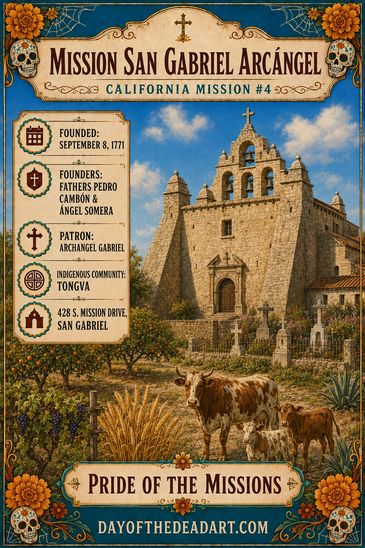
Mission San Gabriel Arcángel was the fourth of the 21 Spanish missions established in Alta California. Located in the San Gabriel Valley east of present-day Los Angeles, the mission became one of the most productive agricultural centers in the California mission system and played an im
Mission San Gabriel Arcángel was the fourth of the 21 Spanish missions established in Alta California. Located in the San Gabriel Valley east of present-day Los Angeles, the mission became one of the most productive agricultural centers in the California mission system and played an important role in the development of the Los Angeles region.
Its complete history includes its Catholic heritage and the experiences, forced labor, religious and cultural disruption, resistance, survival and continuing presence of the Tongva people and other Indigenous communities connected with the mission.
Mission San Gabriel Arcángel was founded on September 8, 1771.
The original mission site was established near the Río de los Temblores, an early Spanish name associated with the Santa Ana River region.
The mission was later moved to the San Gabriel Valley, where better agricultural conditions, water and access to Indigenous communities supported development of the permanent settlement.
Mission San Gabriel became the fourth mission established in Alta California.
Mission San Gabriel Arcángel was founded by Franciscan priests Pedro Cambón and Ángel Somera.
They established the mission as part of the Franciscan mission program overseen by Saint Junípero Serra.
San Gabriel eventually became an important stopping point for travelers moving through Southern California and a major agricultural and economic center within the mission system.
Mission San Gabriel Arcángel was named for Saint Gabriel the Archangel.
In Catholic tradition, Gabriel is the messenger who announces important events connected with God's plan.
Gabriel is especially associated with the Annunciation, when the angel announces to Mary that she will become the mother of Jesus.
The mission's name, therefore, reflects the Catholic religious purpose of the Spanish mission system.
Mission San Gabriel was established within the ancestral homeland of the Tongva people.
Spanish mission records commonly referred to Native people associated with Mission San Gabriel as Gabrielino, although Tongva is widely used today.
Tongva communities lived throughout the Los Angeles Basin, San Gabriel Valley and surrounding areas long before Spanish colonization.
They maintained villages, extensive trade networks and sophisticated knowledge of local plants, animals, waterways and seasonal resources.
The establishment of Mission San Gabriel dramatically changed Indigenous life.
Native people experienced forced religious and cultural change, labor, relocation, disease, restrictions on movement and disruption of traditional family and community structures.
Traditional languages, ceremonies and spiritual practices were placed under pressure by colonial authorities.
Indigenous labor became fundamental to the mission economy. Native workers performed agricultural labor, cared for livestock, constructed buildings and produced many of the goods required by the mission.
Tongva people also resisted Spanish authority.
One of the most important examples occurred in 1785, when a planned uprising against Mission San Gabriel involved several Indigenous villages.
A Tongva woman named Toypurina became one of the best-known figures associated with this resistance.
Tongva people survived the mission period, Mexican rule and later American settlement.
Tongva descendants and communities continue preserving family histories, cultural practices, language revitalization efforts and relationships with their ancestral homeland throughout the Los Angeles region.
Mission San Gabriel Arcángel
428 South Mission Drive
San Gabriel, California 91776
The mission is located approximately nine miles east of downtown Los Angeles.
The surrounding community of San Gabriel developed around the historic mission and became part of the larger metropolitan Los Angeles region.
Mission San Gabriel is architecturally distinctive among California's missions.
Its historic church has a long, fortress-like exterior wall with prominent capped buttresses.
The church design reflects Spanish colonial building traditions and architectural influences brought to New Spain.
The mission was constructed using materials available in the region, including adobe and fired brick.
Thick walls helped support the structure and moderate interior temperatures.
The mission complex historically included:
The church and mission buildings experienced alterations, deterioration and restoration over generations.
On July 11, 2020, a major fire severely damaged the historic church interior.
Extensive restoration followed, and the restored church reopened in 2023.
Mission San Gabriel became one of the major agricultural and economic centers of the California mission system.
Agricultural production included:
Vineyards became particularly important.
Mission residents also raised large numbers of:
Indigenous labor made this agricultural economy possible.
Tongva and other Native workers participated in farming, irrigation, harvesting, livestock care, construction, weaving, leatherworking, food preparation and other mission industries.
Mission San Gabriel produced food and manufactured goods that supported its population and contributed to Spanish colonial settlements throughout Southern California.
Its location also made it an important stopping point along transportation routes connecting missions, presidios and pueblos.
1771: Mission San Gabriel Arcángel was founded by Pedro Cambón and Ángel Somera.
1770s: The mission was relocated from its original site to the San Gabriel Valley.
1781: The Pueblo de Los Ángeles was established west of Mission San Gabriel. The mission became closely connected with the agricultural and economic development of the growing settlement.
1785: Tongva woman Toypurina and Indigenous leaders from several villages became associated with a planned uprising against Mission San Gabriel.
Late 1700s–early 1800s: San Gabriel developed into one of the most productive agricultural missions in Alta California.
1821: Mexico gained independence from Spain, bringing California under Mexican government authority.
1830s: The Mexican government implemented secularization of California's missions.
1850: California became part of the United States as the 31st state.
1859: Mission property was returned to the Catholic Church.
20th century: Preservation and restoration projects helped protect surviving mission structures.
July 11, 2020: A major fire severely damaged the interior of the historic mission church.
2020–2023: Extensive restoration work repaired the church.
2023: The restored historic church reopened.
Toypurina occupies an important place in the history of Mission San Gabriel.
Born around 1760 in a Tongva community, she became associated with Indigenous resistance against Spanish mission authority.
In 1785, Indigenous leaders from several villages planned an attack on Mission San Gabriel.
The uprising was discovered before it could succeed.
Toypurina and several other participants were arrested.
Historical accounts of Toypurina should be considered within the larger story of Indigenous resistance to colonization, forced religious change and disruption of traditional communities.
Today, Toypurina has become an important historical figure in discussions of Tongva history and Native resistance in Southern California.
Mission San Gabriel contains a historic cemetery associated with the mission period and later Catholic community.
The cemetery and surrounding burial areas are sacred places.
Native people, missionaries, settlers and other members of the historic community were buried in areas associated with the mission.
When studying mission cemeteries, it is important to recognize the devastating effects that introduced diseases, forced relocation and colonial living conditions had on Indigenous populations.
Many Native people died during the mission period.
The cemetery therefore represents both Catholic religious history and the human consequences of colonization.
Visitors should remain respectful, avoid disturbing memorials and follow all posted rules.
Mission San Gabriel Arcángel remains an active Catholic parish, historic church and educational destination.
Visitors may be able to explore portions of the historic mission complex, church, gardens, cemetery and museum areas.
Because Mission San Gabriel remains an active religious site, visitor access can be affected by:
Hours, admission policies, tours and religious schedules can change.
Visitors should verify current information directly with Mission San Gabriel before traveling.
Mission San Gabriel Arcángel was founded on September 8, 1771.
It was the fourth California mission.
Franciscan priests Pedro Cambón and Ángel Somera founded Mission San Gabriel as part of the mission program overseen by Junípero Serra.
Mission San Gabriel was established within the ancestral homeland of the Tongva people.
Tongva communities lived throughout the Los Angeles Basin and surrounding region long before Spanish colonization, and their descendants continue today.
Toypurina was a Tongva woman associated with a 1785 Indigenous resistance movement against Mission San Gabriel.
She has become an important historical figure in the study of Tongva resistance and California mission history.
A major fire on July 11, 2020 severely damaged the historic church interior.
The church underwent extensive restoration and reopened in 2023.
Mission San Gabriel Arcángel
428 South Mission Drive
San Gabriel, California 91776
Educational illustration of Mission San Gabriel Arcángel featuring its historic church, long exterior wall, capped buttresses, mission bells, courtyard, grapevines, agricultural fields and San Gabriel Valley landscape, with respectful acknowledgment of the Tongva ancestral homeland.
Student Name: ______________________________
Date: ______________________________
2nd Mission / 4th Mission / 10th Mission / 21st Mission
Draw and label:
List four agricultural products associated with Mission San Gabriel:
Write one question you would ask a Tongva cultural representative, historian or mission educator while learning about Mission San Gabriel.
1. On what date was Mission San Gabriel founded?
September 8, 1771.
2. What number mission was it?
Fourth.
3. Who founded it?
Franciscan priests Pedro Cambón and Ángel Somera.
4. For whom was it named?
The Archangel Gabriel.
5. Which Indigenous people are connected with the region?
The Tongva people.
6. Who was Toypurina?
A Tongva woman associated with Indigenous resistance against Spanish mission authority.
7. What happened in 1785?
Indigenous leaders from several villages planned an uprising against Mission San Gabriel. Spanish authorities discovered the plan and arrested participants, including Toypurina.
8. Name three crops.
Answers may include wheat, barley, corn, beans, grapes, fruit and vegetables.
9. Name three types of livestock.
Answers may include cattle, sheep, horses and mules.
10. Why was San Gabriel economically important?
It developed extensive agriculture, vineyards and livestock operations and helped supply communities in Southern California.
11. What happened after Mexican independence?
California came under Mexican authority, and the missions were later secularized.
12. What happened in 2020?
A major fire severely damaged the historic church interior.
13. Why include Tongva perspectives?
Because the mission was established within Tongva ancestral homeland and Indigenous people experienced forced labor, religious and cultural disruption, disease, resistance and survival. Tongva communities continue today.
Circle the correct answer:
4th Mission
Architecture Activity:
Student drawings will vary.
Agriculture Activity:
Answers may include wheat, barley, corn, beans, grapes, fruit and vegetables.
Think About It:
Answers will vary.
Mission San Luis Obispo de Tolosa was the fifth of the 21 Spanish missions established in Alta California. Founded along California’s Central Coast, it became the center around which the modern city of San Luis Obispo later developed.
Its complete history includes its Catholic heri
Mission San Luis Obispo de Tolosa was the fifth of the 21 Spanish missions established in Alta California. Founded along California’s Central Coast, it became the center around which the modern city of San Luis Obispo later developed.
Its complete history includes its Catholic heritage and the experiences, forced labor, religious and cultural disruption, resistance, survival and continuing presence of Chumash peoples connected with the region.
Mission San Luis Obispo de Tolosa was founded on September 1, 1772.
The mission was established near a Chumash settlement in an area with water, fertile soil and abundant natural resources.
The surrounding valley provided land for farming and livestock, helping the mission develop into an important agricultural settlement.
Mission San Luis Obispo became the fifth mission established in Alta California.
Mission San Luis Obispo de Tolosa was founded by Saint Junípero Serra.
Serra selected the site while traveling between the existing California missions.
The mission became one of the early links in the developing chain of Spanish religious and colonial settlements along El Camino Real.
The mission was named for Saint Louis of Toulouse, known in Spanish as San Luis Obispo de Tolosa.
Saint Louis was a 13th-century Franciscan bishop.
He was born into a royal family but chose a religious life instead of political power.
He became known for humility, religious service and concern for people experiencing poverty.
The word Obispo means bishop in Spanish.
Mission San Luis Obispo was established within the ancestral homeland of Chumash peoples.
Chumash communities lived throughout large portions of California’s Central and Southern Coast long before Spanish colonization.
They developed sophisticated societies, extensive trade networks, plank-built ocean canoes known as tomols and detailed knowledge of coastal and inland environments.
Local Chumash communities relied on acorns, seeds, fish, shellfish, game and other seasonal foods.
The establishment of the mission dramatically changed Indigenous life.
Native people experienced forced religious and cultural change, relocation, labor, disease and restrictions on traditional ways of life.
Indigenous labor supported the mission’s agriculture, livestock operations, construction and crafts.
Traditional languages, ceremonies and family systems were disrupted under colonial rule.
Chumash people also resisted colonial authority in different ways throughout the mission period.
Chumash communities survived Spanish, Mexican and American periods of California history.
Their descendants and tribal communities continue preserving cultural traditions, family histories, languages and relationships with ancestral lands.
Mission San Luis Obispo de Tolosa
751 Palm Street
San Luis Obispo, California 93401
The mission is located in downtown San Luis Obispo.
The modern city grew around the historic mission and takes its name directly from Mission San Luis Obispo de Tolosa.
Mission San Luis Obispo is known for its adobe construction, tiled roof, church, arcades and distinctive layout.
Early mission buildings were constructed using adobe walls and roofs made from plant materials.
These roofs were vulnerable to fire.
Following destructive fires during the mission period, builders increasingly used clay roof tiles.
San Luis Obispo became associated with some of the earliest widespread use of mission roof tiles in California.
The mission complex historically included:
The church has an unusual L-shaped configuration, making it architecturally distinctive among California missions.
Over generations, parts of the original complex were altered, rebuilt or restored.
Mission San Luis Obispo relied heavily on agriculture and livestock.
Crops included:
Mission residents also raised:
Indigenous labor made mission agriculture and industry possible.
Chumash workers participated in:
The mission produced food, hides, tallow and other goods used locally and within the broader California mission network.
1772: Mission San Luis Obispo de Tolosa was founded by Junípero Serra.
1770s: Mission buildings and agricultural operations expanded.
Late 1770s: Fires damaged early mission structures.
Late 1700s: Clay roof tiles became increasingly important because they offered greater fire protection than thatched roofs.
Early 1800s: Agriculture and livestock production continued to expand.
1821: Mexico gained independence from Spain, bringing California under Mexican government authority.
1830s: Mission San Luis Obispo was secularized under Mexican policies.
1840s: Former mission lands and buildings changed ownership and uses.
1850: California became part of the United States.
Late 1800s–1900s: Restoration and preservation efforts altered and stabilized portions of the historic mission.
Today, Mission San Luis Obispo remains an active Catholic parish and important historical landmark in downtown San Luis Obispo.
Fire played an important role in the architectural history of Mission San Luis Obispo.
Early mission roofs made from wood and dried plant material could catch fire easily.
After fires damaged mission buildings, clay tiles became a more durable roofing solution.
Tiles were shaped from clay and fired before being placed over wooden roof supports.
Clay tiles helped reduce the risk of fire and eventually became one of the most recognizable features associated with California mission architecture.
The red tile roof remains an important visual symbol of the mission today.
Mission San Luis Obispo has historic burial associations connected with the mission and later parish community.
Mission-era burial records include Indigenous people, clergy, settlers and other members of the community.
When discussing mission cemeteries, it is important to recognize that many Native people died during the mission period because of introduced diseases, forced relocation and colonial living conditions.
These burial areas therefore represent both Catholic religious history and the human consequences of colonization.
Visitors should treat all burial and memorial areas with respect.
Mission San Luis Obispo de Tolosa remains an active Catholic parish, historical landmark and visitor destination.
Visitors may explore portions of the church, mission grounds, plaza and museum areas when open.
Because it remains an active religious site, access may be affected by:
The mission’s downtown location also places it near restaurants, shops, museums and other attractions in San Luis Obispo.
Hours, admission policies and tour schedules can change.
Visitors should verify current information directly with Mission San Luis Obispo before traveling.
Mission San Luis Obispo de Tolosa was founded on September 1, 1772.
It was the fifth California mission.
The mission was founded by Saint Junípero Serra.
Mission San Luis Obispo was established within the ancestral homeland of Chumash peoples.
Chumash descendants and communities continue maintaining cultural traditions and connections with the region today.
Early mission buildings experienced destructive fires.
Clay roof tiles provided better fire protection than roofs made from dried plant material and eventually became an important feature of California mission architecture.
The city developed around Mission San Luis Obispo de Tolosa and took its name from the historic mission.
Mission San Luis Obispo de Tolosa
751 Palm Street
San Luis Obispo, California 93401
Educational illustration of Mission San Luis Obispo de Tolosa featuring its adobe church, red clay tile roof, bell tower, courtyard, agricultural fields, grapes, wheat and Central Coast landscape, with respectful acknowledgment of the ancestral Chumash homeland.
Student Name: ______________________________
Date: ______________________________
Mission San Luis Obispo de Tolosa was California’s:
3rd Mission / 5th Mission / 11th Mission / 21st Mission
Draw and label:
List four agricultural products associated with Mission San Luis Obispo:
Write one question you would ask a Chumash cultural representative, historian or mission educator while learning about Mission San Luis Obispo.
1. Founding date:
September 1, 1772.
2. Mission number:
Fifth.
3. Founder:
Saint Junípero Serra.
4. Patron saint:
Saint Louis of Toulouse.
5. Indigenous community:
Chumash peoples.
6. Meaning of Obispo:
Bishop.
7. Why were clay tiles important?
They provided better protection from fire than roofs made from plant materials.
8. Name three crops.
Answers may include wheat, barley, corn, beans, grapes, vegetables and orchard fruit.
9. Name three livestock animals.
Answers may include cattle, sheep, horses and mules.
10. Indigenous jobs:
Answers may include farming, livestock care, construction, tile making, weaving, leatherworking, cooking and carpentry.
11. What happened after Mexican independence?
California came under Mexican government authority, and the mission was later secularized.
12. Why is the mission important to the modern city?
The city developed around the mission and took its name from Mission San Luis Obispo de Tolosa.
13. Why include Chumash perspectives?
Because the mission was established in Chumash ancestral territory and Native people experienced labor, disease, forced cultural and religious change, resistance and survival during the mission period.
Circle the correct answer:
5th Mission
Architecture Activity:
Student drawings will vary.
Agriculture Activity:
Answers may include wheat, barley, corn, beans, grapes, vegetables and orchard fruit.
Think About It:
Answers will vary.
Mission San Francisco de Asís, commonly known as Mission Dolores, was the sixth of the 21 Spanish missions established in Alta California. Founded in 1776, it became the religious center of the early Spanish settlement that eventually developed into the city of San Francisco.
The survi
Mission San Francisco de Asís, commonly known as Mission Dolores, was the sixth of the 21 Spanish missions established in Alta California. Founded in 1776, it became the religious center of the early Spanish settlement that eventually developed into the city of San Francisco.
The surviving mission church is the oldest intact building in San Francisco and one of the oldest surviving structures associated with California's mission system.
Its complete history includes its Catholic heritage and the experiences, forced labor, religious and cultural disruption, disease, resistance, survival and continuing presence of the Ramaytush Ohlone and other Indigenous peoplesconnected with the mission.
Mission San Francisco de Asís was founded on June 29, 1776.
The date is the Catholic feast day of Saints Peter and Paul.
A formal dedication ceremony was held later that year after the arrival of necessary church supplies.
The mission was established near a small lake and creek that Spanish settlers called Laguna de Nuestra Señora de los Dolores and Arroyo de los Dolores.
This association with the name Dolores eventually produced the mission's familiar nickname:
Mission Dolores.
Mission San Francisco de Asís became the sixth mission established in Alta California.
Mission San Francisco de Asís was founded by Franciscan priest Francisco Palóu, with fellow Franciscan Pedro Cambón participating in the establishment of the mission.
The expedition establishing the Spanish settlement also included soldiers and settlers under the leadership of José Joaquín Moraga.
The mission was established as part of Spain's effort to extend its religious and colonial presence northward through Alta California.
A nearby military installation, the Presidio of San Francisco, was also established in 1776.
Together, the mission and presidio became foundations of the Spanish settlement that eventually developed into San Francisco.
Mission San Francisco de Asís was named for Saint Francis of Assisi.
Saint Francis was born in Assisi, Italy, around 1181 or 1182.
He founded the religious movement that became the Franciscan Order.
Francis is remembered in Catholic tradition for:
The Franciscan missionaries who established California's missions belonged to the religious tradition associated with Saint Francis.
The modern city of San Francisco ultimately received its name from Saint Francis through the Spanish settlement.
Although its official name is Mission San Francisco de Asís, the mission became widely known as Mission Dolores.
The name came from a nearby creek called Arroyo de Nuestra Señora de los Dolores, meaning approximately "Creek of Our Lady of Sorrows."
The nearby area was therefore associated with the Spanish word Dolores, meaning "Sorrows."
Over time, Mission Dolores became the common name for the historic church and surrounding neighborhood.
Mission San Francisco de Asís was established within the ancestral homeland of the Ramaytush Ohlone, the Indigenous people of the San Francisco Peninsula.
Long before Spanish colonization, Indigenous communities lived throughout the San Francisco Bay Area.
They developed detailed knowledge of the region's:
Communities maintained languages, ceremonies, family relationships and trade networks connecting different parts of the Bay Area and California.
The establishment of Mission Dolores dramatically disrupted Indigenous life.
Native people from the San Francisco Peninsula and surrounding regions were brought into the mission system.
As the mission expanded, Indigenous people from communities farther away were also relocated to Mission Dolores.
Missionization brought:
Indigenous labor supported virtually every part of the mission economy.
Native workers participated in agriculture, livestock care, construction, cooking, weaving, crafts and maintenance.
Disease had particularly devastating consequences.
Large numbers of Indigenous people died during the mission period from introduced illnesses and the effects of colonial living conditions.
Despite these experiences, Indigenous peoples survived.
Ramaytush Ohlone and other Native descendants continue preserving and revitalizing cultural knowledge, family histories, traditions and relationships with ancestral homelands throughout the Bay Area.
Mission San Francisco de Asís — Mission Dolores
3321 16th Street
San Francisco, California 94114
The mission is located in San Francisco's historic Mission District.
The surrounding neighborhood takes its name from Mission Dolores.
The surviving Mission Dolores church was constructed between 1782 and 1791 and dedicated in 1791.
It remains one of California's most important surviving examples of mission-period architecture.
Architectural features include:
The adobe walls were constructed using earth, water and organic materials formed into bricks and dried.
The thick walls helped stabilize interior temperatures.
The roof structure used large wooden beams supporting the roof above the adobe walls.
The historic mission church stands beside the much larger Mission Dolores Basilica, constructed in the early 20th century.
The contrast between the small adobe mission and later basilica provides visitors with a visual example of different periods of San Francisco's Catholic history.
Agriculture around Mission San Francisco de Asís presented challenges because of San Francisco's cool, foggy and windy climate.
Mission agriculture included crops such as:
Livestock included:
Mission agricultural activities eventually extended into areas with more favorable climates around the greater Bay Area.
Native labor supported:
Hides, tallow, agricultural products and livestock became important parts of California's colonial economy.
1776: Mission San Francisco de Asís was founded.
1776: The nearby Presidio of San Francisco was established.
1782: Construction began on the surviving adobe mission church.
1791: The historic church was completed and dedicated.
Late 1700s–early 1800s: Indigenous people from different Bay Area communities were relocated to Mission Dolores.
Early 1800s: Disease caused devastating population losses among Indigenous mission residents.
1821: Mexico gained independence from Spain, bringing Alta California under Mexican authority.
1830s: Mission San Francisco de Asís was secularized under Mexican government policies.
1846: The United States took control of California during the Mexican-American War.
1850: California became the 31st state of the United States.
1906: The great San Francisco earthquake and subsequent fires devastated much of the city.
The historic adobe Mission Dolores church survived.
A larger neighboring parish church was destroyed.
1913–1918: The present Mission Dolores Basilica was constructed beside the historic mission.
1952: Pope Pius XII designated the newer church as a minor basilica.
Today the historic mission and basilica remain important Catholic and historical landmarks.
One of the most remarkable chapters in Mission Dolores history occurred during the 1906 San Francisco earthquake.
On April 18, 1906, a powerful earthquake struck Northern California.
Fires following the earthquake destroyed large sections of San Francisco.
The historic adobe Mission Dolores church survived the disaster.
Its survival is especially significant because many buildings throughout the surrounding city were destroyed.
The larger brick parish church standing beside the mission at the time was badly damaged and later replaced.
The survival of the historic mission makes it an important physical connection to San Francisco's Spanish colonial period.
Mission Dolores contains a surviving historic cemetery.
It is one of the few remaining cemeteries from early San Francisco.
The cemetery contains graves and memorials associated with:
The cemetery landscape includes historic markers, plants and memorials.
When studying Mission Dolores burials, it is particularly important to recognize the devastating mortality experienced by Indigenous people during the mission period.
Thousands of Native people were buried in connection with Mission Dolores over its history, although many graves are not individually marked today.
Disease, forced relocation and colonial living conditions contributed to extraordinary population loss.
The cemetery and all associated burial areas should be treated as sacred places.
Visitors should remain on designated paths and avoid touching or disturbing graves and memorials.
Mission San Francisco de Asís remains an active Catholic religious site, historic landmark, museum and educational destination.
The complex includes:
Visitors may be able to tour the historic mission and cemetery.
Because the complex remains an active Catholic parish, access can be affected by:
Hours, admission prices and tour availability can change.
Visitors should verify current information directly with Mission Dolores before traveling.
Mission San Francisco de Asís was founded on June 29, 1776.
It was the sixth California mission.
The nickname came from a nearby creek known as Arroyo de Nuestra Señora de los Dolores.
The surrounding area became known as Dolores, and the name eventually became commonly associated with the mission.
The San Francisco Peninsula is the ancestral homeland of the Ramaytush Ohlone.
Indigenous people from additional Bay Area and surrounding communities were also brought to Mission Dolores during the mission period.
Their descendants continue today.
Yes.
The historic adobe church survived the devastating 1906 earthquake and fires, making it one of San Francisco's most important surviving early buildings.
Yes.x
The historic mission stands beside Mission Dolores Basilica, and the complex remains part of an active Catholic parish.
Mission San Francisco de Asís — Mission Dolores
3321 16th Street
San Francisco, California 94114
Educational illustration of Mission San Francisco de Asís, commonly called Mission Dolores, featuring the historic adobe church, clay tile roof, wooden beams, mission bells, cemetery, gardens and San Francisco landscape, with respectful acknowledgment of the ancestral homeland and continuing presence of the Ramaytush Ohlone.
Student Name: ______________________________
Date: ______________________________
Mission San Francisco de Asís was California's:
2nd Mission / 6th Mission / 12th Mission / 21st Mission
Draw and label:
List four agricultural or livestock products associated with Mission San Francisco de Asís:
Complete the timeline:
1776: __________________________________
1791: __________________________________
1821: __________________________________
1906: __________________________________
Write one question you would ask a Ramaytush Ohlone cultural representative, historian or mission educator while learning about Mission Dolores.
1. Founding date:
June 29, 1776.
2. Mission number:
Sixth.
3. Founder:
Francisco Palóu, with Pedro Cambón participating in the mission's establishment.
4. Patron saint:
Saint Francis of Assisi.
5. Why Mission Dolores?
The nickname came from the nearby Arroyo de Nuestra Señora de los Dolores.
6. Indigenous people:
Ramaytush Ohlone.
7. Architectural features:
Answers may include adobe walls, wooden beams, clay roof tiles, mission façade, altar and historic religious artwork.
8. Agricultural products:
Answers may include wheat, barley, corn, beans and vegetables.
9. Indigenous work:
Answers may include farming, livestock care, construction, weaving, leatherworking, cooking and maintenance.
10. Indigenous population:
Introduced diseases, forced relocation and colonial living conditions caused devastating population losses.
11. Mexican independence:
California came under Mexican authority, and the mission was later secularized.
12. 1906 disaster:
The San Francisco earthquake and subsequent fires.
13. What happened to Mission Dolores?
The historic adobe mission church survived.
14. Why is it historically important?
It is the oldest intact building in San Francisco and an important surviving structure from California's mission period.
15. Why include Indigenous perspectives?
Because the mission was established within Ramaytush Ohlone ancestral homeland, and Native people experienced forced relocation, labor, disease, religious and cultural disruption and population loss while also demonstrating survival and cultural continuity.
x
6th Mission
1776: Mission San Francisco de Asís was founded.
1791: The surviving historic mission church was completed and dedicated.
1821: Mexico gained independence from Spain.
1906: The historic mission survived the San Francisco earthquake and fires.
Architecture Activity:
Student drawings will vary.
Agriculture Activity:
Answers will vary based on the historically appropriate examples above.
Think About It:
Answers will vary.
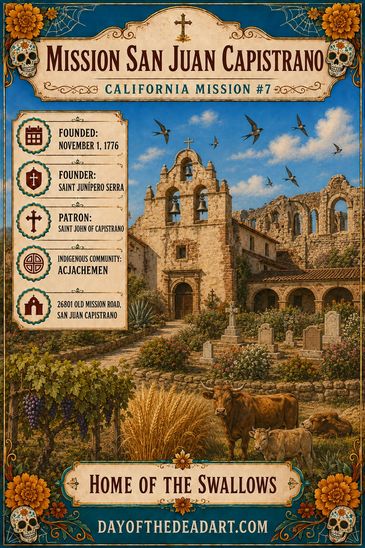
Mission San Juan Capistrano was the seventh of the 21 Spanish missions established in Alta California. Located in present-day Orange County, it is one of California's best-known missions and is especially recognized for the ruins of the Great Stone Church, its historic bells and the tra
Mission San Juan Capistrano was the seventh of the 21 Spanish missions established in Alta California. Located in present-day Orange County, it is one of California's best-known missions and is especially recognized for the ruins of the Great Stone Church, its historic bells and the traditional story of the swallows returning to San Juan Capistrano.
Its complete history includes its Catholic heritage and the experiences, forced labor, religious and cultural disruption, disease, resistance, survival and continuing presence of the Acjachemen people, whose ancestral homeland includes the San Juan Capistrano region.
Mission San Juan Capistrano was permanently founded on November 1, 1776.
The mission actually had an earlier beginning.
Franciscan missionary Fermín Francisco de Lasuén initially established a mission site in the area in October 1775.
Shortly afterward, the missionaries learned of the Indigenous uprising at Mission San Diego de Alcalá.
Because of the unrest and the need to return to San Diego, the first San Juan Capistrano site was temporarily abandoned.
Approximately one year later, Saint Junípero Serra returned and formally reestablished Mission San Juan Capistrano on November 1, 1776.
It became the seventh mission in Alta California.
Mission San Juan Capistrano is generally credited as being founded by Saint Junípero Serra because he personally reestablished the permanent mission in 1776.
Fermín Francisco de Lasuén and other Franciscans had established the earlier 1775 site.
Serra celebrated Mass at the reestablished mission and helped organize the religious community.
Mission San Juan Capistrano became an important link between Mission San Gabriel Arcángel to the north and Mission San Diego de Alcalá to the south.
Mission San Juan Capistrano was named for Saint John of Capistrano, known in Spanish as San Juan Capistrano.
Saint John was a 15th-century Franciscan friar and preacher born in Italy.
He became known throughout Europe for his preaching and religious work.
Because California's missions were administered by Franciscan missionaries, naming a mission for a prominent Franciscan saint reflected the religious identity of the mission system.
Mission San Juan Capistrano was established within the ancestral homeland of the Acjachemen people.
Spanish missionaries historically used the name Juaneño for Indigenous people associated with Mission San Juan Capistrano.
Today, many descendants identify themselves by their ancestral name, Acjachemen.
Acjachemen communities lived throughout what is now southern Orange County and northern San Diego County long before Spanish colonization.
Villages were connected through family relationships, trade routes, ceremonies and shared cultural traditions.
The Acjachemen developed extensive knowledge of:
Food resources included acorns, seeds, plants, fish, shellfish and game.
The establishment of Mission San Juan Capistrano dramatically changed Indigenous life.
Missionization brought:
Indigenous labor made the mission economy possible.
Acjachemen people worked in agriculture, livestock care, construction, weaving, food preparation, leatherworking and other mission industries.
Many Indigenous people died during the mission period because of introduced diseases and colonial living conditions.
Despite these experiences, Acjachemen people survived.
Their descendants continue preserving cultural knowledge, ceremonies, family histories and relationships with their ancestral homeland.
Mission San Juan Capistrano
26801 Old Mission Road
San Juan Capistrano, California 92675
The mission is located in historic downtown San Juan Capistrano in Orange County.
The modern city developed around the mission and takes its name from the historic site.
Mission San Juan Capistrano contains some of the most recognizable mission architecture in California.
The historic complex includes:
One of the most important surviving structures is Serra Chapel.
The chapel dates to the mission period and is traditionally associated with Junípero Serra.
It remains an important Catholic worship space.
The Great Stone Church is one of Mission San Juan Capistrano's most famous features.
Construction began in the late 18th century.
Unlike the adobe buildings commonly associated with California missions, the church was constructed primarily from stone.
The enormous church included:
The church was completed in the early 1800s.
On December 8, 1812, a powerful earthquake struck the region while people were attending Mass for the Feast of the Immaculate Conception.
Much of the Great Stone Church collapsed.
Members of the congregation were killed.
The church was never completely rebuilt.
Today, its dramatic stone ruins are preserved as one of the mission's most recognizable historical features.
Bells played an important role in mission life.
They were used to signal:
Mission San Juan Capistrano's bell wall has become one of its best-known visual symbols.
The bells represent the Catholic religious traditions of the mission while also reminding visitors that mission bells regulated daily life for Indigenous residents living under the mission system.
Mission San Juan Capistrano developed extensive agricultural operations.
Crops included:
Vineyards became particularly important.
Mission residents also raised:
Indigenous workers performed much of the agricultural and industrial labor.
Work included:
Agricultural products supported the mission population and contributed to the broader colonial economy.
1775: Fermín Francisco de Lasuén and other Franciscans established an initial mission site.
1775: The site was temporarily abandoned following news of the uprising at Mission San Diego.
November 1, 1776: Junípero Serra permanently reestablished Mission San Juan Capistrano.
Late 1700s: Agricultural operations, vineyards and livestock herds expanded.
1790s: Construction began on the Great Stone Church.
Early 1800s: The Great Stone Church was completed.
December 8, 1812: A powerful earthquake caused the Great Stone Church to collapse during Mass.
1821: Mexico gained independence from Spain, bringing California under Mexican authority.
1830s: Mission San Juan Capistrano was secularized under Mexican government policies.
1840s: Mission property and buildings experienced major changes following secularization.
1850: California became the 31st state of the United States.
1865: President Abraham Lincoln signed documents returning Mission San Juan Capistrano property to the Catholic Church.
Late 1800s–1900s: Preservation and restoration efforts increased.
20th century: The mission became one of California's best-known historical destinations.
Today, Mission San Juan Capistrano operates as a major historic, religious, cultural and educational site.
Mission San Juan Capistrano became internationally famous for its association with migrating cliff swallows.
Tradition holds that swallows returned to San Juan Capistrano each spring, historically associated with St. Joseph's Day on March 19.
The birds built mud nests around buildings in the area.
Their seasonal migration became celebrated through stories, festivals, songs and community traditions.
Changes in development, habitat and nesting opportunities have affected where large colonies of swallows nest.
The mission and community have undertaken efforts to encourage the birds to return and nest in the area.
Today, the swallows remain one of the most recognizable symbols associated with San Juan Capistrano.
Mission San Juan Capistrano contains historic burial areas connected with the mission period.
Indigenous people, missionaries, settlers and other members of the mission community were buried at or near the mission.
When studying the cemetery, it is important to recognize the high mortality experienced by Indigenous residents during the mission period.
Introduced diseases, forced relocation and colonial living conditions contributed to significant Indigenous population loss.
Mission burial areas therefore represent both Catholic religious traditions and the difficult human consequences of colonization.
Visitors should treat all graves, memorials and burial areas as sacred places.
Mission San Juan Capistrano is one of California's major historical visitor destinations.
Visitors can generally explore areas including:
The mission also hosts educational programs, religious observances and special events.
Because portions of the mission remain connected with Catholic worship and historic preservation, access to certain areas can vary.
Admission prices, hours, tours and event schedules can change.
Visitors should verify current information with Mission San Juan Capistrano before traveling.
Mission San Juan Capistrano was permanently founded on November 1, 1776.
It was the seventh California mission.
An earlier attempt to establish the mission occurred in 1775.
Mission San Juan Capistrano was established within the ancestral homeland of the Acjachemen people.
Spanish mission records historically called mission-associated Indigenous people Juaneño.
Acjachemen descendants and communities continue today.
A powerful earthquake struck on December 8, 1812.
Much of the Great Stone Church collapsed during Mass, killing members of the congregation.
Its ruins remain preserved today.
Migrating cliff swallows historically returned to the area during spring and built mud nests.
Their migration became associated with San Juan Capistrano traditions, particularly St. Joseph's Day.
Yes.
In 1865, President Abraham Lincoln signed documents returning mission property to the Catholic Church.
Mission San Juan Capistrano
26801 Old Mission Road
San Juan Capistrano, California 92675
Educational illustration of Mission San Juan Capistrano featuring the Great Stone Church ruins, historic bell wall, Serra Chapel, adobe corridors, courtyard fountain, gardens, grapevines and cliff swallows, with respectful acknowledgment of the ancestral homeland and continuing presence of the Acjachemen people.
Student Name: ______________________________
Date: ______________________________
15.Why is it important to include Acjachemen perspectives when studying Mission San Juan Capistrano?
16.CIRCLE THE CORRECT ANSWER
Mission San Juan Capistrano was California's:
3rd Mission / 7th Mission / 15th Mission / 21st Mission
Draw and label:
List four agricultural products associated with Mission San Juan Capistrano:
Complete the timeline:
1775: __________________________________
1776: __________________________________
1812: __________________________________
1821: __________________________________
1865: __________________________________
Write one question you would ask an Acjachemen cultural representative, historian or mission educator while learning about Mission San Juan Capistrano.
1. Founding date:
November 1, 1776.
2. Mission number:
Seventh.
3. Founder:
Saint Junípero Serra permanently reestablished the mission in 1776. Fermín Francisco de Lasuén and other Franciscans had established the initial 1775 site.
4. Patron saint:
Saint John of Capistrano.
5. Indigenous community:
Acjachemen people.
6. Historical Spanish mission name:
Juaneño.
7. Why was the first site abandoned?
The missionaries withdrew after learning about the Indigenous uprising at Mission San Diego de Alcalá.
8. Name three crops:
Answers may include wheat, barley, corn, beans, grapes, vegetables and orchard fruit.
9. Name three livestock animals:
Answers may include cattle, sheep, horses and mules.
10. What was the Great Stone Church?
A large stone church constructed at Mission San Juan Capistrano during the mission period.
11. What happened in 1812?
An earthquake caused much of the Great Stone Church to collapse during Mass.
12. What were mission bells used for?
They signaled Mass, prayer, work, meals, celebrations, important events and emergencies.
13. Why are swallows associated with the mission?
Migrating cliff swallows historically returned to the San Juan Capistrano area during spring and built nests there.
14. Abraham Lincoln's connection:
In 1865, Lincoln signed documents returning mission property to the Catholic Church.
15. Why include Acjachemen perspectives?
Because the mission was established within Acjachemen ancestral homeland, and Native people experienced forced labor, disease, religious and cultural disruption and loss of freedom while maintaining cultural survival and continuing connections to their homeland.
7th Mission
1775: First attempt to establish the mission.
1776: Mission permanently established by Junípero Serra.
1812: Earthquake destroyed much of the Great Stone Church.
1821: Mexico gained independence from Spain.
1865: Mission property was returned to the Catholic Church under documents signed by President Abraham Lincoln.
Architecture Activity:
Student drawings will vary.
Agriculture Activity:
Answers may include wheat, barley, corn, beans, grapes, vegetables and orchard fruit.
Think About It:
Answers will vary.
Mission Santa Clara de Asís was the eighth of the 21 Spanish missions established in Alta California. Founded in 1777 in the Santa Clara Valley, it was the first California mission named for a woman and developed into an important agricultural and religious community.
The mission is espe
Mission Santa Clara de Asís was the eighth of the 21 Spanish missions established in Alta California. Founded in 1777 in the Santa Clara Valley, it was the first California mission named for a woman and developed into an important agricultural and religious community.
The mission is especially unusual because its historic legacy eventually became connected with Santa Clara University, one of California's oldest institutions of higher education.
Its complete history includes its Catholic heritage and the experiences, forced labor, religious and cultural disruption, disease, resistance, survival and continuing presence of Ohlone peoples, particularly Tamien-speaking communities, whose ancestral homelands include the Santa Clara Valley.
Mission Santa Clara de Asís was founded on January 12, 1777.
It became the eighth mission established in Alta California.
The mission was established only months after Mission San Francisco de Asís to strengthen Spain's presence around the southern San Francisco Bay.
Flooding and environmental conditions forced the mission community to relocate several times before a more permanent site was developed.
The history of Mission Santa Clara therefore includes multiple mission sites rather than one location occupied continuously from 1777.
Mission Santa Clara de Asís was founded by Franciscan priests Tomás de la Peña and José Antonio Murguía.
The mission was established as part of the expanding Franciscan mission system under the leadership of Saint Junípero Serra.
The Spanish colonial government also wanted settlements in the Santa Clara Valley because of its strategic position between Monterey and San Francisco.
The nearby Pueblo de San José, established later in 1777, became California's first Spanish civilian pueblo.
Mission Santa Clara de Asís was named for Saint Clare of Assisi.
Saint Clare was born in Assisi, Italy, in 1193 or 1194.
Inspired by Saint Francis of Assisi, she chose a religious life devoted to poverty, prayer and service.
She founded the religious community that became known as the Poor Clares.
Saint Clare died in 1253 and was canonized in 1255.
Mission Santa Clara holds an important distinction:
It was the first California mission named for a woman.
The name Santa Clara means Saint Clare in Spanish.
Mission Santa Clara was established within the ancestral homelands of Ohlone peoples, particularly communities associated with the Santa Clara Valley and often identified today with Tamien or Tamyen heritage.
Indigenous communities lived throughout the Santa Clara Valley and greater San Francisco Bay Area for thousands of years before Spanish colonization.
They developed extensive knowledge of:
Food resources included acorns, seeds, roots, berries, fish, waterfowl, shellfish and game.
Communities maintained family networks, trade relationships, ceremonies and distinct languages.
The establishment of Mission Santa Clara dramatically changed Indigenous life.
Missionization brought:
Native labor made the mission economy possible.
Indigenous residents worked in farming, livestock care, construction, weaving, food preparation and other mission industries.
As occurred throughout the California mission system, introduced diseases caused devastating population losses.
Native people also resisted mission authority through escape, maintaining cultural practices, refusing aspects of mission life and other forms of resistance.
Ohlone peoples survived Spanish, Mexican and American colonization.
Their descendants and communities continue preserving and revitalizing languages, cultural traditions, family histories and relationships with ancestral lands throughout the Bay Area.
The historic Mission Santa Clara site is located on the campus of:
Santa Clara University
500 El Camino Real
Santa Clara, California 95053
The mission church stands near the center of the university campus.
The modern city of Santa Clara takes its name from the mission.
Mission Santa Clara did not remain at its original 1777 location.
Flooding from the Guadalupe River and other environmental challenges repeatedly affected early mission sites.
The mission was relocated several times as missionaries searched for safer ground, reliable water and suitable agricultural land.
Over time, the mission community moved farther from areas vulnerable to flooding.
The present mission church represents the later location and reconstruction of the historic mission rather than the original 1777 structure.
The multiple locations make Santa Clara particularly useful for teaching students how geography and natural hazards influenced California mission development.
Mission Santa Clara has experienced more rebuilding and relocation than many California missions.
Its churches and associated structures were affected over generations by:
Historic mission buildings used adobe construction and materials available in the Santa Clara Valley.
Architectural features associated with the mission include:
The present church reflects a reconstruction inspired by earlier mission architecture.
A major event in the modern history of Mission Santa Clara occurred in 1926.
A fire destroyed the mission church then standing on the Santa Clara University campus.
The loss included important portions of the historic structure and interior.
The church was subsequently reconstructed.
The replacement was designed to recall the appearance and architectural character of the earlier mission church.
The present building therefore represents both the mission's historic Catholic tradition and the long history of rebuilding at Santa Clara.
The Santa Clara Valley became famous for its fertile agricultural land.
Mission agriculture included:
Mission residents developed:
Livestock included:
Indigenous labor supported virtually every part of the mission economy.
Native workers performed:
Agricultural products and livestock supported the mission population and contributed to the developing colonial economy of the Santa Clara Valley.
January 12, 1777: Mission Santa Clara de Asís was founded by Tomás de la Peña and José Antonio Murguía.
1777: The Pueblo de San José was established nearby as California's first Spanish civilian pueblo.
Late 1770s–early 1800s: Mission Santa Clara was relocated several times because of flooding and environmental conditions.
Late 1700s: Agricultural production expanded throughout the Santa Clara Valley.
Early 1800s: Mission buildings, livestock herds, orchards and fields continued developing.
1821: Mexico gained independence from Spain, bringing Alta California under Mexican government authority.
1830s: Mission Santa Clara was secularized under Mexican government policies.
1850: California became the 31st state of the United States.
1851: Jesuit priest John Nobili established Santa Clara College at the former mission site.
Santa Clara College eventually developed into Santa Clara University.
Late 1800s: The college expanded around the historic mission location.
1926: A major fire destroyed the mission church.
1920s: The church was reconstructed following the fire.
Today, Mission Santa Clara stands at the center of Santa Clara University and remains an active Catholic religious and historical site.
Mission Santa Clara has one of the most unusual present-day settings of any California mission.
The mission stands on the campus of Santa Clara University.
In 1851, Jesuits established Santa Clara College at the former mission site.
The school expanded over generations and eventually became Santa Clara University.
This created a direct connection between California's Spanish mission era and the development of higher education in the state.
The university preserves the mission church as an important part of its campus and history.
The site also provides opportunities to study the mission era from multiple perspectives, including Catholic history, Indigenous history, Spanish colonization, Mexican California and modern education.
Mission Santa Clara's history includes mission-era burials and Indigenous burial grounds associated with the mission community.
Large numbers of Native people died during the mission period.
Introduced diseases, forced relocation and colonial living conditions contributed to severe Indigenous population decline.
As the mission grounds changed over generations and the college and university developed, the landscape surrounding historic burial areas also changed.
The history of these burials remains an important part of understanding Mission Santa Clara.
All known and unidentified burial areas should be regarded as sacred places.
Visitors and students should approach the subject respectfully and recognize the descendants of the Indigenous communities whose ancestors lived and died at the mission.
Mission Santa Clara de Asís remains an active Catholic church, historic site and central landmark of Santa Clara University.
Visitors to the university campus may be able to view the mission church and surrounding grounds.
The site is used for:
Because the mission is located on an active university campus and remains a functioning church, access can be affected by university activities and religious services.
Parking regulations and campus access policies may also change.
Visitors should verify current information with Santa Clara University and Mission Santa Clara before traveling.
Mission Santa Clara was founded on January 12, 1777.
It was California's eighth mission.
The mission was named for Saint Clare of Assisi, an important Catholic saint and follower of Saint Francis of Assisi.
Santa Clara was the first California mission named for a woman.
The mission was established within the ancestral homelands of Ohlone peoples, particularly Tamien-speaking communities associated with the Santa Clara Valley.
Their descendants and communities continue today.
Early mission sites experienced flooding and other environmental problems.
The community relocated as missionaries searched for safer ground with reliable water and suitable agricultural land.
In 1851, Jesuits established Santa Clara College at the former mission site.
The college eventually became Santa Clara University, which developed around the historic mission location.
Mission Santa Clara de Asís
Santa Clara University
500 El Camino Real
Santa Clara, California 95053
Educational illustration of Mission Santa Clara de Asís featuring its historic-style church, bell tower, clay tile roof, gardens, agricultural fields, orchards and Santa Clara Valley landscape, with respectful acknowledgment of the ancestral homelands and continuing presence of Ohlone and Tamien peoples.
Student Name: ______________________________
Date: ______________________________
Mission Santa Clara de Asís was California's:
2nd Mission / 8th Mission / 14th Mission / 21st Mission
Draw and label:
List four crops or agricultural products associated with Mission Santa Clara:
Complete the timeline:
1777: __________________________________
1821: __________________________________
1851: __________________________________
1926: __________________________________
Why did flooding influence the location of Mission Santa Clara?
Write one question you would ask an Ohlone or Tamien cultural representative, historian, university educator or mission representative while learning about Mission Santa Clara.
1. Founding date:
January 12, 1777.
2. Mission number:
Eighth.
3. Founders:
Franciscan priests Tomás de la Peña and José Antonio Murguía.
4. Patron saint:
Saint Clare of Assisi.
5. What was unusual about the patron?
Santa Clara was the first California mission named for a woman.
6. Indigenous peoples:
Ohlone peoples, particularly Tamien-speaking communities associated with the Santa Clara Valley.
7. Why was the mission relocated?
Flooding and environmental conditions made earlier locations unsuitable, leading the mission community to move to safer sites.
8. Name three crops:
Answers may include wheat, barley, corn, beans, grapes, vegetables and orchard fruit.
9. Name three livestock animals:
Answers may include cattle, sheep, horses and mules.
10. Indigenous work:
Answers may include farming, irrigation, livestock care, construction, weaving, leatherworking, cooking, carpentry and maintenance.
11. What happened after Mexican independence?
California came under Mexican authority, and the mission was later secularized.
12. What happened in 1926?
A major fire destroyed the mission church, which was subsequently reconstructed.
13. What was established in 1851?
Santa Clara College.
14. What institution occupies the site today?
Santa Clara University.
15. Why include Indigenous perspectives?
Because the mission was established within Indigenous ancestral homelands, and Native people experienced forced labor, relocation, disease and religious and cultural disruption while maintaining cultural survival and continuing connections to the region.
8th Mission
1777: Mission Santa Clara de Asís was founded.
1821: Mexico gained independence from Spain.
1851: Santa Clara College was established at the former mission site.
1926: Fire destroyed the mission church, which was later reconstructed.
Flooding affected early mission locations and forced the community to relocate to safer ground.
Architecture Activity:
Student drawings will vary.
Agriculture Activity:
Answers may include wheat, barley, corn, beans, grapes, vegetables and orchard fruit.
Think About It:
Answers will vary.

Mission San Buenaventura was the ninth of the 21 Spanish missions established in Alta California. Founded in 1782 along California's coast, it became an important agricultural and religious settlement and eventually gave its name to the modern city of Ventura.
Mission San Buenaventura holds
Mission San Buenaventura was the ninth of the 21 Spanish missions established in Alta California. Founded in 1782 along California's coast, it became an important agricultural and religious settlement and eventually gave its name to the modern city of Ventura.
Mission San Buenaventura holds a special place in mission history because it was the ninth and final California mission personally founded by Saint Junípero Serra.
Its complete history includes its Catholic heritage and the experiences, forced labor, religious and cultural disruption, disease, resistance, survival and continuing presence of the Chumash people, whose ancestral homeland includes the Ventura region.
Mission San Buenaventura was founded on March 31, 1782.
The mission was established near the Pacific Coast and the Santa Clara River Valley in an area with access to water, fertile land and established Chumash communities.
Serra had originally hoped to establish a mission in the region years earlier, but circumstances delayed its founding.
Mission San Buenaventura became the ninth mission established in Alta California.
Mission San Buenaventura was founded by Saint Junípero Serra.
Serra celebrated Mass at the mission's founding in 1782.
San Buenaventura was the last of the California missions that Serra personally established before his death at Carmel Mission in 1784.
Serra personally founded nine of the eventual 21 California missions.
Mission San Buenaventura was named for Saint Bonaventure, known in Spanish as San Buenaventura.
Saint Bonaventure was a 13th-century Franciscan theologian, bishop and cardinal.
He became one of the most influential scholars of the Franciscan tradition.
He was known for combining religious faith, philosophy and theological study.
The Spanish word Buenaventura can be translated as "good fortune" or "good venture," although the mission's name specifically honors Saint Bonaventure.
Mission San Buenaventura was established within the ancestral homeland of the Chumash people.
Chumash communities had lived throughout the Santa Barbara Channel region, Ventura County and surrounding coastal and inland areas for thousands of years before Spanish colonization.
The Chumash developed sophisticated societies and extensive trade networks.
Coastal Chumash communities constructed plank-built canoes known as tomols.
Tomols allowed people to travel across the Santa Barbara Channel and maintain connections with the Channel Islands.
Chumash communities possessed extensive knowledge of:
The establishment of Mission San Buenaventura dramatically changed Indigenous life.
Missionization brought:
Chumash labor made the mission economy possible.
Native workers constructed buildings, maintained irrigation systems, cultivated fields, cared for livestock and produced goods used by the mission.
Introduced diseases and colonial living conditions caused severe population losses.
Chumash people also resisted Spanish and Mexican colonial authority in different ways.
Despite enormous disruption, Chumash people survived.
Chumash descendants and tribal communities continue preserving languages, ceremonies, artistic traditions, family histories and relationships with ancestral homelands.
Mission Basilica San Buenaventura
211 East Main Street
Ventura, California 93001
The mission is located in historic downtown Ventura, only a short distance from the Pacific Ocean.
The modern city officially named San Buenaventura and commonly called Ventura developed around the historic mission.
Mission San Buenaventura experienced repeated rebuilding during its history.
Early mission structures were constructed from materials such as wood, earth and adobe.
The surviving church reflects the evolution of mission architecture over generations.
Important architectural features include:
The mission complex historically also contained:
Earthquakes, weather, development and rebuilding changed the mission complex over time.
One of Mission San Buenaventura's most important achievements was its historic water system.
Water was essential for:
Mission residents developed an aqueduct system to transport water from the Ventura River area toward the mission.
Parts of the historic water system survived and provide evidence of the engineering required to support a large agricultural settlement.
Indigenous labor and knowledge played an essential role in construction and operation of mission agricultural systems.
The Ventura region's relatively mild climate supported extensive agriculture.
Mission crops included:
Orchards and vineyards became important parts of the mission landscape.
Livestock included:
Indigenous workers performed much of the labor associated with:
Mission San Buenaventura produced food, hides, tallow and other products that supported the community and colonial economy.
March 31, 1782: Mission San Buenaventura was founded by Junípero Serra.
1780s: Agricultural fields, livestock operations and mission buildings developed.
Late 1700s: Irrigation and water systems expanded.
Early 1800s: San Buenaventura developed into an important agricultural mission.
1812: A powerful series of earthquakes affected coastal California and damaged mission communities throughout the region.
1821: Mexico gained independence from Spain, bringing California under Mexican authority.
1830s: Mission San Buenaventura was secularized under Mexican government policies.
1840s: Mission lands and buildings experienced major changes following secularization.
1850: California became the 31st state of the United States.
1862: Mission property was formally returned to the Catholic Church under a proclamation signed by President Abraham Lincoln.
Late 1800s–1900s: Restoration and preservation efforts continued.
2020: Pope Francis elevated the mission church to the status of a minor basilica.
Today it is known as Mission Basilica San Buenaventura.
Mission San Buenaventura is particularly important in the history of Junípero Serra.
Serra personally founded nine missions in Alta California:
San Buenaventura was the final mission Serra personally founded.
He died two years later in 1784 at Mission San Carlos Borromeo in Carmel.
Mission San Buenaventura historically contained a cemetery and burial areas associated with the mission community.
Indigenous people, missionaries, settlers and other residents were buried in connection with the mission.
Changes to downtown Ventura and the mission property altered portions of the historic landscape over generations.
When studying mission burials, it is important to recognize that many Indigenous people died during the mission period because of introduced diseases, forced relocation and colonial living conditions.
Historic burial areas should be regarded as sacred places and treated respectfully.
Mission Basilica San Buenaventura remains an active Catholic parish, minor basilica, historic landmark and visitor destination.
Visitors may be able to explore:
Because the mission remains an active Catholic parish, access may be affected by:
Hours, admission, tours and worship schedules can change.
Visitors should verify current information directly with Mission Basilica San Buenaventura before traveling.
Mission San Buenaventura was founded on March 31, 1782.
It was California's ninth mission.
Saint Junípero Serra founded Mission San Buenaventura.
It was the final California mission he personally founded.
Mission San Buenaventura was established within the ancestral homeland of the Chumash people.
Chumash descendants and tribal communities continue today.
Water supported agriculture, orchards, livestock and daily life.
The mission developed an aqueduct system to transport water from the Ventura River area.
Yes.
It remains an active Catholic parish and was designated a minor basilica in 2020.
Mission Basilica San Buenaventura
211 East Main Street
Ventura, California 93001
Educational illustration of Mission San Buenaventura featuring its historic church, bell tower, adobe walls, red clay roof, courtyard, gardens, aqueduct, vineyards and Pacific coastal landscape, with respectful acknowledgment of the ancestral homeland and continuing presence of the Chumash people.
Student Name: ______________________________
Date: ______________________________
Mission San Buenaventura was California's:
4th Mission / 9th Mission / 15th Mission / 21st Mission
Draw and label:
Draw a simple aqueduct carrying water from a river toward the mission.
Label:
Complete the timeline:
1782: __________________________________
1821: __________________________________
1830s: _________________________________
1862: __________________________________
2020: __________________________________
Write one question you would ask a Chumash cultural representative, historian or mission educator while learning about Mission San Buenaventura.
1. Founding date:
March 31, 1782.
2. Mission number:
Ninth.
3. Founder:
Saint Junípero Serra.
4. Why important to Serra's story?
It was the ninth and final California mission he personally founded.
5. Patron saint:
Saint Bonaventure.
6. Indigenous community:
Chumash people.
7. What is a tomol?
A traditional Chumash plank-built canoe.
8. Crops:
Answers may include wheat, barley, corn, beans, grapes, vegetables and orchard fruit.
9. Livestock:
Answers may include cattle, sheep, horses and mules.
10. Water system:
It supplied water for drinking, agriculture, orchards, livestock and daily activities.
11. Mexican independence:
California came under Mexican authority and the mission was later secularized.
12. Abraham Lincoln:
Mission property was returned to the Catholic Church under a proclamation signed by Lincoln.
13. 2020 designation:
Minor basilica.
14. Connection to Ventura:
The modern city developed around the mission and received its name from San Buenaventura.
15. Why include Chumash perspectives?
Because the mission was established in Chumash ancestral territory and Native people experienced forced labor, disease, relocation and cultural disruption while maintaining cultural survival and continuing connections to their homeland.
9th Mission
Activities: Student answers and drawings will vary.
Mission Santa Bárbara was the tenth of the 21 Spanish missions established in Alta California. Founded in 1786 between the Pacific Ocean and the Santa Ynez Mountains, it became one of the most prominent missions in the California system.
Recognizable by its twin bell towers and classical faça
Mission Santa Bárbara was the tenth of the 21 Spanish missions established in Alta California. Founded in 1786 between the Pacific Ocean and the Santa Ynez Mountains, it became one of the most prominent missions in the California system.
Recognizable by its twin bell towers and classical façade, Mission Santa Bárbara is traditionally known as the “Queen of the Missions.”
It is also unusual because Franciscan friars have maintained a continuing presence at the site since the mission era.
Its complete history includes its Catholic heritage and the experiences, forced labor, religious and cultural disruption, disease, resistance, survival and continuing presence of the Chumash people, whose ancestral homeland includes the Santa Barbara region.
Mission Santa Bárbara was founded on December 4, 1786.
December 4 is the Catholic feast day of Saint Barbara, the mission's patron saint.
Mission Santa Bárbara became the tenth mission established in Alta California.
Its location provided access to water, agricultural land and established Chumash communities.
Mission Santa Bárbara was founded under the leadership of Franciscan priest Fermín Francisco de Lasuén.
Lasuén became president of the California missions following the death of Junípero Serra in 1784.
During his leadership, additional missions were established to fill large geographic gaps between earlier settlements.
Santa Bárbara was the first California mission founded after Serra's death.
The mission was named for Saint Barbara, an early Christian martyr.
According to Catholic tradition, Barbara remained committed to her Christian faith despite persecution.
She became associated with protection from sudden death, storms and lightning.
Her feast day is celebrated on December 4.
The modern city and county of Santa Barbara ultimately received their names from Saint Barbara through the Spanish settlement.
Mission Santa Bárbara was established within the ancestral homeland of the Chumash people.
Chumash communities lived throughout the Santa Barbara Channel region, Channel Islands and surrounding inland valleys for thousands of years before Spanish colonization.
The Santa Barbara Channel supported densely populated Indigenous communities.
Chumash society included:
Coastal Chumash people constructed sophisticated plank-built canoes called tomols.
Tomols allowed travel and trade across the Santa Barbara Channel and between mainland communities and the Channel Islands.
Chumash knowledge included:
The establishment of Mission Santa Bárbara profoundly disrupted Indigenous life.
Missionization brought:
Chumash labor supported mission agriculture, livestock operations, construction, weaving, crafts and other industries.
Introduced diseases caused devastating population decline.
Chumash people also resisted colonial authority.
The most significant organized resistance occurred during the Chumash Revolt of 1824, which involved Indigenous communities associated with Santa Bárbara, Santa Inés and La Purísima.
Chumash people survived Spanish, Mexican and American colonization.
Chumash descendants and tribal communities continue preserving and revitalizing languages, ceremonies, arts, family histories and relationships with ancestral homelands.
Old Mission Santa Barbara
2201 Laguna Street
Santa Barbara, California 93105
The mission stands north of downtown Santa Barbara with the Santa Ynez Mountains rising behind it.
Its prominent setting and architecture make it one of California's most recognizable mission sites.
Mission Santa Bárbara is famous for its monumental church façade and two matching bell towers.
Its architecture differs from the simpler adobe façades associated with many other California missions.
Important architectural features include:
The present church was constructed largely after the destructive 1812 earthquake.
Its façade incorporates stone and classical design elements.
The twin towers have become the mission's defining visual feature.
Mission Santa Bárbara is traditionally called the Queen of the Missions.
The nickname reflects the mission's:
The title is a popular historical nickname rather than an official designation within the original mission system.
Mission Santa Bárbara developed extensive agricultural operations.
Crops included:
The mission maintained:
Livestock included:
Chumash labor supported virtually every aspect of the mission economy.
Native workers participated in:
Water systems were developed to supply the mission, gardens and agricultural lands.
December 4, 1786: Mission Santa Bárbara was founded under Fermín Francisco de Lasuén.
Late 1780s–early 1800s: Mission buildings, agriculture and livestock operations expanded.
1812: A major earthquake severely damaged Mission Santa Bárbara.
After 1812: Construction began on the church that forms the core of the present mission.
1821: Mexico gained independence from Spain, bringing California under Mexican government authority.
1824: Mission Santa Bárbara became one of the important locations associated with the Chumash Revolt.
1830s: California's mission system underwent secularization.
1846: United States forces took control of California during the Mexican-American War.
1850: California became the 31st state.
Late 1800s–1900s: Restoration and preservation work continued.
1925: A major earthquake again damaged buildings at Mission Santa Bárbara.
Restoration followed.
Today the mission remains an active Franciscan religious community, Catholic church, museum and historical destination.
On December 21, 1812, a powerful earthquake struck the Santa Barbara region.
Mission buildings were severely damaged.
The destruction required substantial reconstruction.
The present mission church was developed after this disaster.
The earthquake demonstrates how California's natural environment shaped mission architecture.
Earthquakes repeatedly damaged adobe and masonry structures throughout the mission system.
The Chumash Revolt of 1824 was one of the most significant Indigenous resistance movements of California's mission era.
The revolt involved Chumash communities associated with:
Long-standing pressures contributed to resistance, including mission discipline, forced cultural and religious change, labor demands and colonial control over Indigenous life.
Conflict began at Mission Santa Inés and spread to other communities.
At Mission Santa Bárbara, groups of Chumash people left the mission and moved into interior regions.
The revolt demonstrates that Indigenous people were not passive participants in the mission system.
They made decisions, resisted colonial authority and sought to protect their communities and autonomy.
Mission Santa Bárbara developed an extensive water system.
Water was transported and stored for:
Historic waterworks associated with the mission provide evidence of the engineering used to support the community.
Chumash labor played an essential role in building and maintaining these systems.
Mission Santa Bárbara contains a historic cemetery and burial areas associated with the mission and later Catholic community.
People buried in connection with the mission include:
The cemetery remains a sacred place.
It is particularly important to recognize the large number of Indigenous deaths that occurred during the mission era.
Introduced diseases, forced relocation and colonial living conditions contributed to severe Chumash population loss.
Visitors should remain respectful and follow all rules protecting graves and memorials.
Old Mission Santa Barbara remains an active Franciscan religious community, Catholic site, museum, historic landmark and educational destination.
Visitors may be able to explore:
The mission also maintains important historical collections and archival materials.
Because Mission Santa Bárbara remains an active religious site, access can be affected by:
Hours, admission prices and tour schedules can change.
Visitors should verify current information directly with Old Mission Santa Barbara before traveling.
Mission Santa Bárbara was founded on December 4, 1786.
It was California's tenth mission.
The nickname reflects its impressive architecture, twin bell towers, prominent setting and large historic complex.
Mission Santa Bárbara was established within the ancestral homeland of the Chumash people.
Chumash descendants and tribal communities continue today.
Chumash people associated with Santa Bárbara, Santa Inés and La Purísima resisted mission authority.
The revolt was one of the most significant Indigenous resistance movements of the California mission period.
Its most recognizable features are its stone façade and matching twin bell towers.
Old Mission Santa Barbara
2201 Laguna Street
Santa Barbara, California 93105
Educational illustration of Mission Santa Bárbara featuring its famous twin bell towers, stone façade, mission fountain, courtyard, gardens, vineyards, historic water system and Santa Ynez Mountains, with respectful acknowledgment of the ancestral homeland and continuing presence of the Chumash people.
Student Name: ______________________________
Date: ______________________________
Mission Santa Bárbara was California's:
5th Mission / 10th Mission / 17th Mission / 21st Mission
Draw and label:
List four agricultural products associated with Mission Santa Bárbara:
Complete the timeline:
1786: __________________________________
1812: __________________________________
1821: __________________________________
1824: __________________________________
1925: __________________________________
Write one question you would ask a Chumash cultural representative, Franciscan representative, historian or mission educator while learning about Mission Santa Bárbara.
1. Founding date:
December 4, 1786.
2. Mission number:
Tenth.
3. Founder:
Fermín Francisco de Lasuén.
4. Patron saint:
Saint Barbara.
5. Indigenous community:
Chumash people.
6. Tomol:
A traditional Chumash plank-built canoe used for travel, fishing and trade.
7. Why Queen of the Missions?
The popular nickname reflects the mission's impressive architecture, twin towers, large complex and prominent setting.
8. Architectural features:
Answers may include twin bell towers, stone façade, arched entrance, courtyard, fountain, church and gardens.
9. Crops:
Answers may include wheat, barley, corn, beans, grapes, vegetables and orchard fruit.
10. Livestock:
Answers may include cattle, sheep, horses and mules.
11. What happened in 1812?
A major earthquake severely damaged the mission and led to reconstruction.
12. Chumash Revolt:
An 1824 Indigenous resistance movement involving Chumash communities associated with Santa Bárbara, Santa Inés and La Purísima.
13. Water system:
It supplied water for drinking, agriculture, gardens, orchards, livestock and other daily activities.
14. Mexican independence:
California came under Mexican government authority, and the missions were later secularized.
15. Why include Chumash perspectives?
Because the mission was established in Chumash ancestral territory, and Native people experienced forced labor, relocation, disease and religious and cultural disruption while also resisting colonial authority and maintaining cultural survival.
10th Mission
1786: Mission Santa Bárbara was founded.
1812: Major earthquake damaged the mission.
1821: Mexico gained independence from Spain.
1824: Chumash Revolt.
1925: Another major earthquake damaged the mission.
Activities: Student answers and drawings will vary.
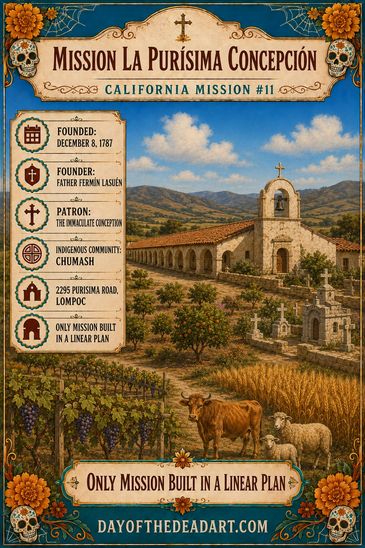
Mission La Purísima Concepción was the eleventh of the 21 Spanish missions established in Alta California. Founded in 1787 near present-day Lompoc, the mission is especially important today because its reconstructed complex preserves one of the most extensive examples of a Cal
Mission La Purísima Concepción was the eleventh of the 21 Spanish missions established in Alta California. Founded in 1787 near present-day Lompoc, the mission is especially important today because its reconstructed complex preserves one of the most extensive examples of a California mission landscape.
Its complete history includes its Catholic heritage and the experiences, forced labor, disease, cultural disruption, resistance, survival and continuing presence of the Chumash people.
Mission La Purísima Concepción was founded on December 8, 1787, the Catholic Feast of the Immaculate Conception.
It was the 11th California mission.
A devastating earthquake in 1812 destroyed much of the original mission. The community relocated approximately four miles away, and the present site was formally established in 1813.
The mission was founded by Fermín Francisco de Lasuén, president of the California missions after the death of Junípero Serra.
La Purísima Concepción means The Immaculate Conception and honors the Catholic doctrine concerning Mary, the mother of Jesus.
Mission La Purísima was established within Chumash ancestral homeland.
Chumash communities lived throughout the Santa Barbara Channel, Santa Ynez Valley and surrounding areas for generations before Spanish colonization.
They possessed extensive knowledge of native plants, wildlife, waterways, trade, agriculture and regional ecosystems.
Missionization brought forced religious and cultural change, labor, relocation, restrictions on movement and introduced diseases.
Chumash labor supported mission construction, farming, livestock care, weaving, leatherworking and other industries.
Chumash people also resisted mission authority. La Purísima became one of the principal locations of the Chumash Revolt of 1824.
Chumash descendants and tribal communities continue preserving cultural traditions, languages, ceremonies and relationships with ancestral homelands.
La Purísima Mission State Historic Park
2295 Purisima Road
Lompoc, California 93436
Unlike many missions built around a compact quadrangle, the relocated La Purísima complex developed a more elongated arrangement.
Important features include:
Much of the present complex was reconstructed during a major Civilian Conservation Corps restoration project in the 1930s.
Mission residents cultivated:
Livestock included:
Native labor supported farming, irrigation, livestock care, weaving, leatherworking, construction, blacksmithing and food production.
1787: Mission founded.
1812: Major earthquake destroyed much of the original mission.
1813: Mission established at its present location.
1821: Mexico gained independence from Spain.
1824: La Purísima became a major center of the Chumash Revolt.
1830s: Mission secularized.
1930s: Civilian Conservation Corps carried out extensive reconstruction.
Today: The mission operates as a California State Historic Park.
Historic burial areas at La Purísima include Indigenous people and members of the mission community.
Introduced diseases and colonial living conditions caused significant Indigenous mortality.
All mission burial areas should be treated as sacred places.
La Purísima is preserved as La Purísima Mission State Historic Park.
Visitors can explore reconstructed buildings, historic rooms, agricultural areas, livestock spaces and interpretive exhibits.
Hours, entrance fees and programs can change, so visitors should verify current information with California State Parks.
December 8, 1787.
Mission #11.
Fermín Francisco de Lasuén.
The Chumash people.
The 1812 earthquake severely damaged the original complex.
Suggested photographs:
Educational illustration of La Purísima Mission featuring adobe buildings, clay-tile roofs, agricultural fields, livestock, gardens and the surrounding Lompoc landscape, with respectful acknowledgment of Chumash ancestral homeland.
Mission Santa Cruz was the twelfth California mission. It was founded near the mouth of the San Lorenzo River and named for the Holy Cross rather than for an individual saint.
August 28, 1791
Fermín Francisco de Lasuén
The name Santa Cruz means Holy Cross.
Mission Santa Cruz was the twelfth California mission. It was founded near the mouth of the San Lorenzo River and named for the Holy Cross rather than for an individual saint.
August 28, 1791
Fermín Francisco de Lasuén
The name Santa Cruz means Holy Cross.
The mission was established within the homeland of Awaswas-speaking Ohlone peoples, including the Uypi community associated with the Santa Cruz area.
Missionization brought forced relocation, labor, disease and religious and cultural disruption.
Indigenous people from additional communities were also brought into Mission Santa Cruz.
Native descendants continue preserving their histories and relationships with the region.
The historic mission area is in Santa Cruz, California.
Santa Cruz Mission State Historic Park
144 School Street
Santa Cruz, California 95060
The original mission complex included:
Earthquakes repeatedly damaged the mission. The original church eventually collapsed in the 19th century.
A surviving adobe building from the mission complex remains protected by California State Parks.
Crops included grain, vegetables, fruit and other agricultural products.
Livestock included cattle, sheep and horses.
Indigenous labor supported farming, construction, crafts and livestock care.
1791: Mission founded.
1793: Adobe church established on higher ground.
1797: The nearby Spanish civilian settlement of Villa de Branciforte was established.
1821: Mexican independence.
1834: Mission secularized.
1857: The deteriorated original mission church collapsed.
20th century: Preservation and reconstruction efforts created the present historic interpretation.
Indigenous people and other members of the mission community were buried in association with Mission Santa Cruz.
Introduced diseases caused substantial Native mortality during the mission period.
Visitors can explore Santa Cruz Mission State Historic Park and nearby Catholic mission-related sites.
Verify hours and programs before visiting.
When founded? August 28, 1791.
Mission number? #12.
Founder? Fermín Lasuén.
What does Santa Cruz mean? Holy Cross.
Does the original mission church survive? No; a surviving mission adobe and later reconstructed structures help interpret the site.

Mission Nuestra Señora de la Soledad, commonly called Mission Soledad, was the thirteenth California mission. It was founded in the Salinas Valley as an important link between Mission San Antonio and Carmel Mission.
October 9, 1791
Fermín Francisco de Lasuén
The mission honors Our Lady of Solitude, a Catholic title for Mary.
The mission was founded near an Esselen village. Indigenous people associated with the mission also included Chalon Ohlone and people from other nearby communities.
Missionization brought forced labor, relocation, religious pressure, disease and cultural disruption.
Descendants of these Native peoples continue today.
Mission Nuestra Señora de la Soledad
36641 Fort Romie Road
Soledad, California 93960
The original mission used adobe construction.
Floods, weather, secularization and abandonment left much of the complex in ruins.
Restoration efforts during the 20th century rebuilt the chapel and portions of the mission complex.
Agriculture included:
Livestock included cattle, sheep, horses and mules.
1791: Mission founded.
1814: California Governor José Joaquín de Arrillaga died at Soledad and was buried in the chapel.
1821: Mexican independence.
1835: Mission secularized.
1859: Mission property returned to the Catholic Church.
1950s: Major restoration efforts rebuilt the chapel.
The mission includes historic burial areas. Governor Arrillaga was among those buried at the mission.
Indigenous deaths from disease and colonial conditions are an important part of its history.
Mission Soledad functions as a historic Catholic chapel and museum.
Ask students to identify the founding date, patron, Indigenous communities, agriculture, adobe architecture, governor's burial, secularization and restoration.
Founding date: October 9, 1791.
Founder: Fermín Lasuén.
Patron: Our Lady of Solitude.
Primary local Indigenous community: Esselen, with Chalon Ohlone and others associated with the mission.
Governor: José Joaquín de Arrillaga.
Mission San José was founded in 1797 near the Indigenous village of Oroysom in what is now Fremont. It became one of the larger and more economically important California missions.
June 11, 1797
Fermín Francisco de Lasuén
Saint Joseph, foster father of Jesus and husband of Mary.
The mission was established in Ohlone homeland.
Over time, people from Ohlone, Bay Miwok and Northern Valley Yokuts communities were incorporated into the mission population.
Missionization brought forced labor, relocation, disease and cultural disruption.
Native descendants and tribal communities continue today.
Mission San José
43300 Mission Boulevard
Fremont, California 94539
The mission historically included a large church, adobe buildings, workshops and agricultural facilities.
A destructive 1868 earthquake severely damaged the historic church.
The present church is a reconstruction based on the historic mission structure.
Mission San José developed:
Native labor supported agriculture, construction, weaving, leatherworking and other production.
1797: Mission founded.
Early 1800s: Mission became economically prosperous.
1821: Mexican independence.
1830s: Secularization.
1868: Major earthquake damaged the mission.
20th century: Church reconstructed.
Historic burials include Indigenous people, clergy and settlers.
The mission is associated with St. Joseph Catholic Church in Fremont and includes museum and historic areas.
Students should identify:
Mission San Juan Bautista was the fifteenth California mission. It is especially known for its large church, its location near the San Andreas Fault, and its unusual three-aisle church design.
June 24, 1797
Fermín Francisco de Lasuén
Saint John the Baptist
June 24 is the traditional feast of the Nativity of Saint John the Baptist.
Mission San Juan Bautista was established within the homeland of the Mutsun Ohlone people.
Missionization brought forced religious change, labor, relocation, disease and disruption of traditional life.
Mutsun descendants continue cultural preservation and revitalization efforts.
Mission San Juan Bautista
406 Second Street
San Juan Bautista, California 95045
The church is notable as the only three-aisle mission church in Alta California.
Features include:
The mission sits beside part of the historic town plaza.
Crops included grain, vegetables, orchards and vineyards.
Livestock included cattle, sheep and horses.
1797: Mission founded.
1812: Earthquake damage affected the church.
1821: Mexican independence.
1830s: Secularization.
1906: San Francisco earthquake caused additional damage.
1970s: Restoration reopened the side aisles of the church.
The historic cemetery contains burials connected with Indigenous and later mission communities.
Mission San Juan Bautista remains an active Catholic church and major historic destination.
Founding: June 24, 1797.
Founder: Fermín Lasuén.
Mission: #15.
Patron: Saint John the Baptist.
Indigenous homeland: Mutsun Ohlone.
Important geographic feature: San Andreas Fault.
Mission San Miguel Arcángel was the sixteenth California mission. It is particularly important for its remarkable early-19th-century painted church interior, created with the participation of Salinan artists and workers.
July 25, 1797
Fermín Francisco de Lasuén
Saint Michael the Archangel
Mission San Miguel was founded in Salinan ancestral homeland.
The site was chosen partly because of the large Salinan population in the surrounding area.
Missionization brought forced labor, religious and cultural disruption, disease and restrictions on Indigenous freedom.
Salinan people survived and their descendants continue today.
Mission San Miguel Arcángel
775 Mission Street
San Miguel, California 93451
The church includes:
The surviving interior decoration is among the most significant artistic features of the California missions.
Crops included grains, grapes, vegetables and orchard products.
Livestock included cattle, sheep and horses.
1797: Mission founded.
1806: Fire destroyed the early chapel and other buildings.
1818: Church completed.
1821: Mexican independence.
1830s: Secularization.
2003: San Simeon earthquake caused significant damage.
Restoration allowed the historic church to reopen.
The mission's interior paintings were created during the early 1800s with the participation of Salinan artists.
They are especially important because the original decorative scheme has largely survived without complete repainting.
Founding: July 25, 1797.
Founder: Fermín Lasuén.
Patron: Saint Michael the Archangel.
Indigenous community: Salinan.
Church completion: 1818.
Modern earthquake: 2003 San Simeon earthquake.
Mission San Fernando Rey de España was founded in 1797 to close the large travel gap between Missions San Gabriel and San Buenaventura. Its location helped make it an important stop on El Camino Real and a major historic site in the San Fernando Valley.
September 8, 1797
Fermín Francisco de Lasuén
Saint Ferdinand III of Castile, a medieval Spanish king recognized as a Catholic saint.
The mission was established within a region connected with Tongva and Tataviam communities, with Chumash people also connected to the broader valley and mission population.
Mission records applied the term Fernandeño to Native people associated with Mission San Fernando.
Missionization brought forced labor, relocation, disease, religious pressure and cultural disruption.
Descendants of the Indigenous peoples of the region continue today.
Mission San Fernando Rey de España
15151 San Fernando Mission Boulevard
Mission Hills, California 91345
The mission complex includes:
Its most famous building is the Convento, recognizable by its long colonnade.
Mission San Fernando produced:
Livestock included cattle, sheep and horses.
The mission also became known for wine production and other agricultural industries.
1797: Mission founded.
1821: Mexico gained independence.
1834: Mission secularized.
1840s: Mission property underwent major changes.
19th century: Buildings deteriorated and were used for various secular purposes.
20th century: Major restoration projects preserved and reconstructed mission structures.
Mission San Fernando has historic burial associations, and the nearby San Fernando Mission Cemetery contains later Catholic burials.
The mission functions as a Catholic historic site and museum.
Founding: September 8, 1797.
Founder: Fermín Lasuén.
Patron: Saint Ferdinand III.
Mission: #17.
Indigenous communities: Tongva and Tataviam, with Chumash connections.
Famous feature: Convento colonnade.
Mission San Luis Rey de Francia was the eighteenth California mission. Because of its large population, agricultural production and extensive complex, it became known as the “King of the Missions.”
June 13, 1798
Fermín Francisco de Lasuén
Saint Louis IX, King of France
The mission was established within the homeland of people who call themselves Payómkawichum.
Spanish mission terminology later applied the name Luiseño to Native people associated with Mission San Luis Rey.
Missionization brought forced labor, relocation, disease and cultural disruption.
Payómkawichum people survived and their communities continue today.
Old Mission San Luis Rey
4050 Mission Avenue
Oceanside, California 92057
Important features include:
The current historic church is one of the most substantial surviving California mission churches.
Mission San Luis Rey operated extensive:
It maintained very large livestock herds.
1798: Mission founded.
Early 1800s: Mission expanded rapidly.
1815: Major church completed.
1821: Mexican independence.
1830s: Secularization.
19th–20th centuries: Franciscan restoration gradually revived the historic complex.
The mission contains a historic cemetery and a distinctive mortuary chapel.
Old Mission San Luis Rey operates as a Franciscan religious center, historic site, museum and retreat center.
Mission: #18.
Founding: June 13, 1798.
Founder: Fermín Lasuén.
Patron: Saint Louis IX.
Nickname: King of the Missions.
Indigenous community: Payómkawichum.
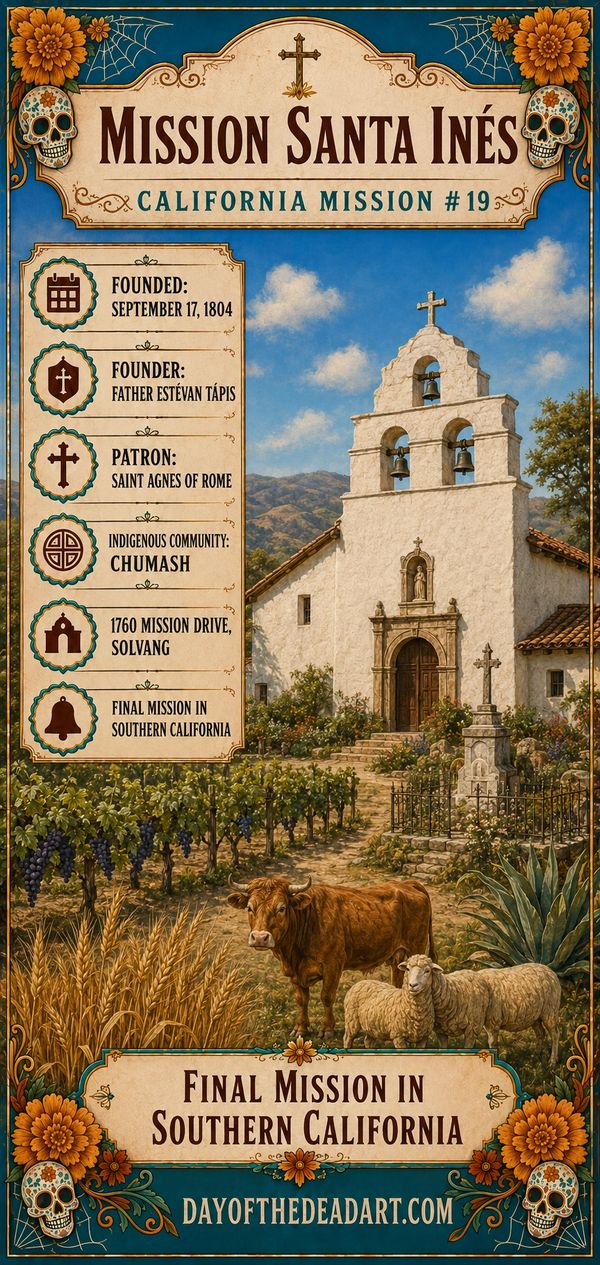
Mission Santa Inés was the nineteenth California mission and the last mission established in Southern California. It was founded in the Santa Ynez Valley to help connect Mission Santa Bárbara with La Purísima.
September 17, 1804
Estévan Tapís
Saint Agnes of Rome, known in Spanish as Santa Inés.
Mission Santa Inés was established within Chumash ancestral homeland.
Chumash people worked in mission agriculture, construction and industries while experiencing forced religious change, labor restrictions, disease and disruption of traditional community life.
Santa Inés became an important location in the Chumash Revolt of 1824.
Old Mission Santa Inés
1760 Mission Drive
Solvang, California 93463
Features include:
The complex retains important original archaeological, architectural and landscape features.
Mission agriculture included grains, vineyards, orchards and livestock.
1804: Mission founded.
1812: Major earthquake severely damaged the mission.
1821: Mexican independence.
1824: Chumash Revolt began with conflict at Santa Inés and spread through the region.
1830s: Secularization.
20th century: Restoration and preservation strengthened the historic complex.
Historic mission burial areas include Indigenous and Catholic community members.
Mission Santa Inés remains an active Catholic parish, museum and historical destination beside the modern community of Solvang.
Mission: #19.
Founder: Estévan Tapís.
Founding: September 17, 1804.
Patron: Saint Agnes.
Indigenous community: Chumash.
Earthquake: 1812.
Major resistance: Chumash Revolt of 1824.
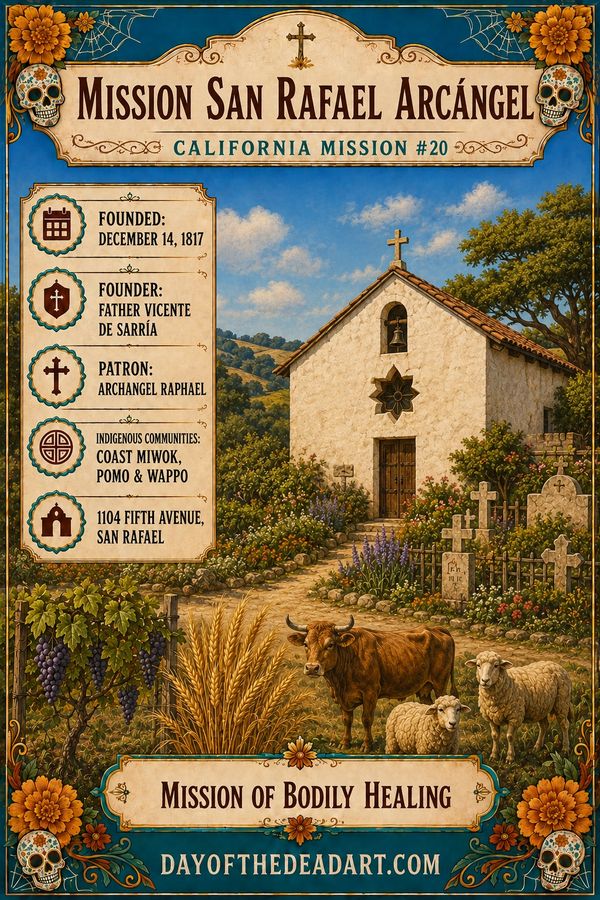
Mission San Rafael Arcángel was the twentieth California mission. Unlike most of the missions, it began in 1817 as an asistencia, or mission outpost, intended in part to care for sick Indigenous people from Mission San Francisco de Asís. It became a full mission in 1822.
December 14, 1817
José Vicente de Sarría
Saint Raphael the Archangel
In Catholic tradition Raphael is particularly associated with healing, making the name appropriate for a site originally created partly as a medical asistencia.
Mission San Rafael was established in Coast Miwok homeland.
Indigenous people from other North Bay communities were also brought into the mission system.
Missionization brought disease, relocation, labor requirements and religious and cultural disruption.
Native communities survived and remain present in Northern California.
Mission San Rafael Arcángel
1104 Fifth Avenue
San Rafael, California 94901
The original mission buildings no longer survive.
Important historical features included:
The present chapel is a 20th-century reconstruction on the historic site.
Mission residents raised livestock and cultivated crops suited to the North Bay environment.
1817: San Rafael established as an asistencia.
1822: Elevated to full mission status.
1821: Mexico had already gained independence from Spain, placing the later mission period under Mexican authority.
1834: Secularization.
19th century: Original buildings deteriorated and disappeared.
1949: Mission chapel reconstructed.
Historic Indigenous and Catholic burials are associated with the mission community, although the original landscape changed substantially.
The reconstructed mission chapel stands beside Saint Raphael Catholic Church in downtown San Rafael.
Mission: #20.
Founding: December 14, 1817.
Founder: José Vicente de Sarría.
Patron: Saint Raphael.
Original purpose: asistencia and health-related outpost.
Full mission status: 1822.
Reconstruction: 1949.
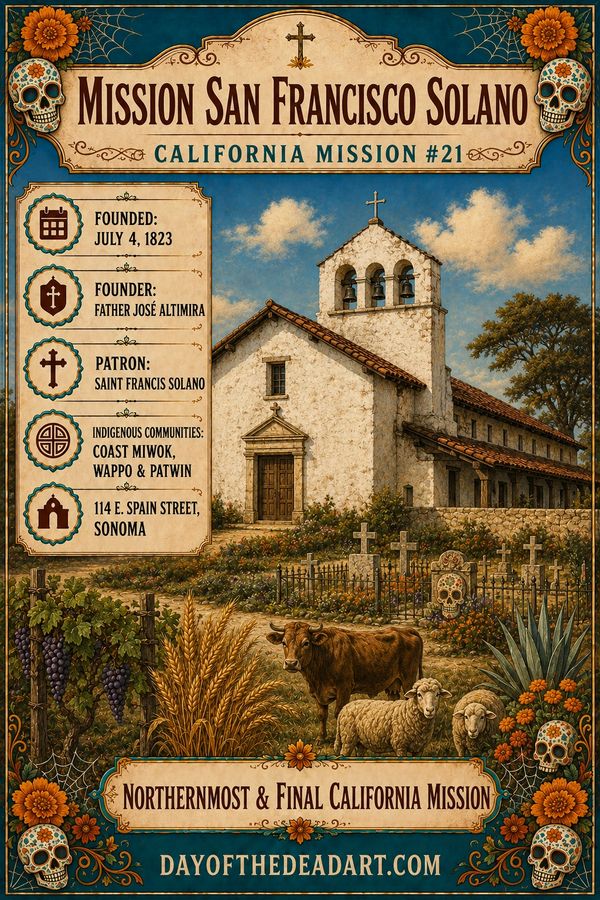
Mission San Francisco Solano was the 21st, final and northernmost California mission. It is unique because it was the only Alta California mission founded after Mexico gained independence from Spain.
July 4, 1823
Father José Altimira
The mission was named for Saint Francis Solano, a Spanish Franciscan missionary known for his religious work in South America.
Mission San Francisco Solano affected several Indigenous peoples of the North Bay, including:
Missionization brought displacement, labor, disease, forced cultural and religious change and disruption of traditional communities.
Native descendants and tribal nations continue today.
Mission San Francisco Solano
114 East Spain Street
Sonoma, California 95476
The historic site includes:
Parts of the original mission deteriorated after secularization, and surviving structures reflect both the mission era and later rebuilding.
The location offered:
Mission residents cultivated crops, maintained vineyards and raised livestock.
Indigenous labor was central to the mission economy.
1823: Mission founded.
1820s: Agricultural operations developed.
1833–1834: Mexican secularization policies brought mission administration to an end.
1830s: General Mariano Guadalupe Vallejo became a major figure in Sonoma.
1846: The Bear Flag Revolt occurred in Sonoma during the transition from Mexican to American control of California.
The mission later became part of California's historic park system.
San Francisco Solano was:
These features make it an important transition point between the Spanish mission era and Mexican California.
Mission-era records include Indigenous deaths and burials connected with the settlement.
As with the other missions, disease and colonial disruption caused substantial harm to Native communities.
Mission San Francisco Solano is preserved as part of Sonoma State Historic Park.
Visitors can explore the mission along with nearby historic buildings around Sonoma Plaza.
Hours and admission policies should be verified with California State Parks before visiting.
Mission San Francisco Solano.
July 4, 1823.
Father José Altimira.
No. California was under Mexican government authority.
It was the final and northernmost of California's 21 missions and the only one founded under Mexican rule.
Suggested photographs:
Educational illustration of Mission San Francisco Solano featuring its adobe chapel, Sonoma landscape, vineyards, livestock, mission courtyard and surrounding North Bay hills, with respectful acknowledgment of the Coast Miwok, Patwin, Wappo, Pomo and other Indigenous peoples connected with the region.
Student Name: ______________________________
Date: ______________________________
Help me find the artist to give them credit for the beautiful metal Papel picado design that reflects the essence of Day of the Dead art and celebrates Dia de los Muertos.

This piece I created, featuring some of my work, was inspired by the Day of the Dead art I saw installed. My contribution blends in with the Dia de los Muertos theme showcased by the City of Los Angeles.

The Spiderweb Symbol in Robert Collado’s Día de los Muertos Art
In his Día de los Muertos art, Robert Collado employs the spiderweb as a contemporary symbol of ancestry, memory, family, and artistic connection. Each strand signifies a person, story, or generation, while the entire web illustrates the enduring bonds between the living and those who came before us. This modern interpretation of the spiderweb is prevalent in Collado’s Los Angeles metalwork and stands as his unique artistic contribution to the Day of the Dead art realm—not merely as an ancient or universally traditional Día de los Muertos symbol.
