💀🕸️ Original Art, Ofrendas, Symbols, History & More by Robert Collado🕸️ 💀
Signed in as:
filler@godaddy.com

The Meaning of a Día de los Muertos Ofrenda.
Photos, Marigolds, Candles, Food, Water & Papel Picado
An ofrenda is an offering or altar created during Día de los Muertos to honor and remember loved ones who have died. Ofrendas may include photographs, candles, marigolds, water, food, pan de muerto, papel picado and meaningful personal belongings. Each element contributes to a place of remembrance where families preserve stories, celebrate lives and welcome the memory of those they love.

Every part of an ofrenda has meaning. Marigolds are traditionally used to guide spirits with their color and fragrance, candles provide light, water represents refreshment, food welcomes loved ones home, and photographs identify the people being remembered. Papel picado, copal, salt, skulls, and other offerings add layers of cultural and spiritual symbolism to the altar.

A traditional ofrenda can be simple or elaborate. Begin with a table or raised platform, add photographs of loved ones, then decorate it with candles, marigolds, papel picado, water, food, sugar skulls, incense, and personal keepsakes. The most important part is creating the altar with intention, respect, and remembrance.

What Goes on a Day of the Dead Altar?
A Day of the Dead altar commonly includes family photographs, marigolds, candles, food, water, sugar skulls, papel picado, copal incense, salt, religious images, and personal belongings that help tell the story of the person being remembered.

Why Photos of Loved Ones Are Placed on an Ofrenda.
Photographs identify the loved ones being honored and keep their memory at the center of the altar. Families often choose meaningful portraits or family photos that recall important moments, relationships, and stories from the person's life.

Marigolds, known in Mexico as cempasúchil, are among the most recognizable symbols of Día de los Muertos. Their bright orange and yellow colors and strong fragrance are traditionally believed to help guide spirits toward the ofrenda. Marigold petals are often arranged around the altar or placed along pathways leading to it.

Candles on a Día de los Muertos ofrenda symbolize light, hope, remembrance, and spiritual guidance. Their flames are traditionally believed to help guide the souls of deceased loved ones back to the altar during the celebration. Families may place several candles on an ofrenda, sometimes dedicating each one to a specific person being remembered.

Food placed on a Día de los Muertos altar represents hospitality, memory, and the continued bond between the living and the dead. Families often include favorite meals, fruit, sweets, and traditional pan de muerto as offerings for returning spirits. Pan de muerto is especially associated with the holiday and symbolizes remembrance, family, and the cycle of life and death.

A glass or container of water is commonly placed on an ofrenda to refresh the spirits after their long journey back to the world of the living. Water also represents purity and renewal. It is one of the simplest but most meaningful offerings found on traditional Día de los Muertos altars.

Papel picado is colorful tissue paper cut into detailed decorative designs and displayed above or around an ofrenda. It represents the element of air and the fragile nature of life. The movement of the thin paper in the breeze can also symbolize the presence of spirits returning to visit their families.

Meaning of Sugar Skulls and Calaveras on an Ofrenda.
Sugar skulls and calaveras represent a colorful and creative way of acknowledging death while celebrating life. Their decorative designs can express personality, humor, remembrance, and the individuality of the people being honored.

Meaning of Copal Incense on a Día de los Muertos Ofrenda.
Copal incense is traditionally associated with ceremony, purification, prayer, and spiritual connection. Its fragrant smoke adds another sensory element to the ofrenda and helps create a reflective atmosphere around the altar.
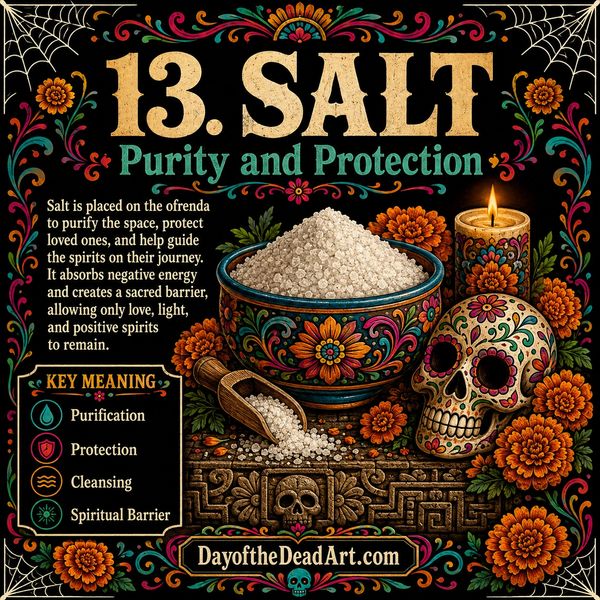
Salt is traditionally placed on an ofrenda as a symbol of purification and spiritual protection. It may be displayed in a small dish or arranged into decorative shapes or crosses. In many traditions, salt is believed to help preserve the soul and protect it during its journey between the worlds of the living and the dead.

Personal possessions are placed on an ofrenda to represent the personality, interests, work, hobbies, or favorite activities of the person being honored. These objects may include jewelry, clothing, toys, tools, musical instruments, artwork, or other meaningful belongings. They make each altar unique and help tell the story of the individual being remembered.

What Do the Different Levels of an Ofrenda Mean?
Ofrendas may have one level or several raised levels depending on family tradition and regional customs. These levels create space for photographs, flowers, food, candles, religious images, and personal offerings arranged throughout the altar.
Building an ofrenda for Día de los Muertos is a meaningful way to honor and remember loved ones who have passed. Begin by choosing a special location and creating one or more levels for the altar. Add photographs of loved ones, candles, marigolds, papel picado, water, salt, favorite foods, pan de muerto, sugar skulls, copal incense, personal belongings, and other meaningful objects. Each element carries symbolism and helps tell the story of the person being remembered. Día de los Muertos artist Robert Collado, owner and artist of DayoftheDeadArt.com, shares the traditions, symbolism, and artistic meaning behind ofrendas to help families create altars that celebrate life, memory, family, and love. Remember, “If No one Loves you, Robert will always Love you.”
Meaning and Symbolism of Ofrenda Elements.
Every object placed on an ofrenda carries meaning. Candles represent light and guidance, marigolds are believed to help lead spirits home, water refreshes the returning soul, salt symbolizes purification, and favorite foods and personal belongings honor the life and personality of the person being remembered. Together, these elements transform the altar into a deeply personal Día de los Muertos tribute.
Traditional vs. Modern Day of the Dead Altars.
Traditional Día de los Muertos altars often include candles, marigolds, papel picado, photographs, food, water, salt, incense, and religious imagery. Modern ofrendas may also include contemporary decorations, artwork, digital photographs, keepsakes, and personal objects that reflect the life of the person being honored. Both traditional and modern altars share the same purpose: remembrance, love, and connection.
When Is an Ofrenda Created and Taken Down?
Ofrendas are commonly prepared in the days leading up to Día de los Muertos, especially around October 31, November 1, and November 2. Families may begin building their altars earlier so there is time to carefully arrange photographs, candles, flowers, food, and meaningful objects. After the celebration, the ofrenda is usually taken down once the family feels the period of remembrance has ended.
Discover the meaning, history, and art of Día de los Muertos.
Día de los Muertos is filled with traditions that connect art, remembrance, family, and cultural history. Robert Collado explores the meaning behind ofrendas, marigolds, sugar skulls, papel picado, La Catrina, candles, copal incense, traditional foods, cemetery visits, and other important symbols of the celebration. Through DayoftheDeadArt.com, Robert Collado shares the artistic and cultural meaning behind these traditions while helping visitors better understand how they are used to honor loved ones. Robert Collado also connects these traditions to Day of the Dead art, showing how symbolism, history, and creativity continue to keep Día de los Muertos alive today.
Robert Collado creates original Day of the Dead art inspired by Día de los Muertos traditions, remembrance, symbolism, Los Angeles culture, and personal artistic experience.